

Sing, Muse, of the triumphs
and tribulations
of Latin American scholars
gathered to discuss
the fragile threads
linking Science, Technology, and Society.
Sing, Muse, of the congress
held earlier this year in Colombia,
barely a couple of days after
the presidential election
with the rising shadow of fascism.
Sing, Muse, of that uneasy feeling,
sharpened throughout three days
of intellectual exchange,
leading to the realization
that our inquiries must choose
between the Scylla of romanticism
and the Charybdis of rationalism.
First Day of Congress
From the beginning I felt the hospitality of the professors of the Universidad Nacional de Colombia, despite them being busy with final arrangements. Too aware of my peripheral role in this community, I decided to stay at the margin and pay close attention to others. A feminist ethnographer working with textiles gave the inaugural lecture. She started by confessing her ambivalent feelings about the usefulness of these international meetings. She next remembered one of the first congresses of the Latin American network, where John Law eagerly spoke about non-human agency. Despite the lack of remuneration and the inevitable waste (printed materials, disposable coffee cups, megabytes of stored files in the cloud, etc.), the committee accepted the challenge of hosting the 16th Congress of the Asociación Latinoamericana de Estudios Sociales de la Ciencia y la Tecnología (ESOCITE), hoping it would be an opportunity to connect different researchers and projects. The nostalgia in the room was almost palpable.
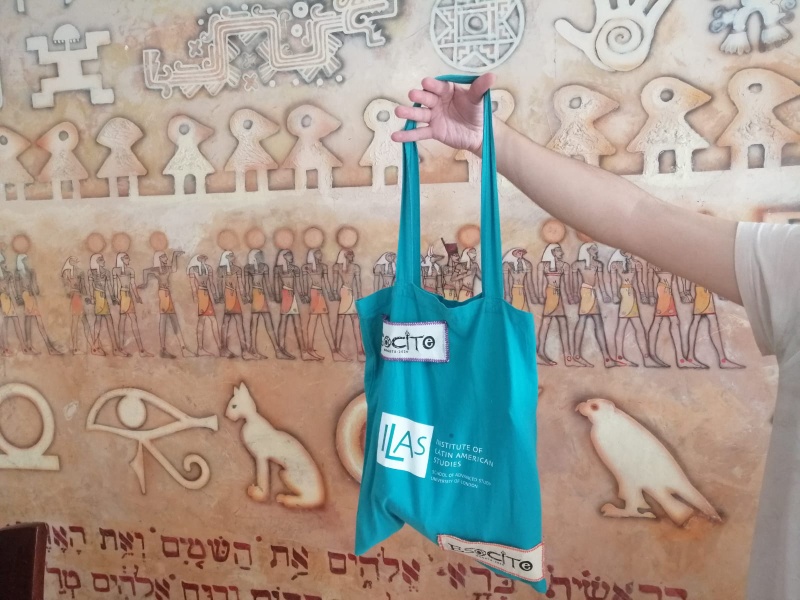
Recycled bag from other international events with the ESOCITE logo patched by hand. Image by author.
The first workshop was dedicated to speculative futures. I presented my wee contribution there: a mixture of anti-psychiatry, Sylvia Plath, Peter Sloterdijk, and Saint Paul’s conversion. My panel companion included a couple of scholars who talked quite vaguely about the injustices perpetrated by mainstream techno-science. I often feel that such discourses are rather shy when it comes to delineating who the villains and heroes are. Moreover, they give no indication about how to avoid the replication of those very injustices in our inquiries. And yet, I would hesitate too. After all, this congress is more than an international event. I even dare to say it is a cosmopolitical exercise where legions of scientists – and the non-humans they are said to represent – reunite to find new ways to pursue socially engaged research in our troubled contemporary times. Fair enough, nobody wants to cast the first stone… But how can we succeed in our quest if we are reluctant to deal with the technical intricacies of our studies? That is why I found very refreshing the work of a young anthropologist on the risks of transposing statistical models into the formulation of sexual health public policies. She explained that several elements in the experience of LGBTQ+ communities are frequently overlooked in hospitals, simply because they do not fit with the parameters of their sex education programs. And she closed her presentation asking “why bother taking into account the complexities of desire, resistance, and self-care, when the health system has resolved beforehand those questions by appealing to the alleged universal access to pamphlets and pills?” Many of us nodded in agreement.
At the coffee break, I met a sanguine architect complaining that the workshop she just attended was flooded by post-positivist researchers bragging about their data. One of her compatriots said, quite diplomatically, that ESOCITE is an inclusive network, so even scientistic sociologists are welcomed. Then I thought to myself: “STS is a machine able to dissolve dichotomies, alright, but it might as well reproduce them in its own quarters”. The infamous science wars might have finished, but the belligerent climate remains. Of course, the issue is not a quarrel between rigorous analysis and the lack of it, but a question about the ordering of manifold research procedures available – given that they are truly available to us (I shall return to this). I also remembered the reflexivity debates among STS pioneers back in day. Against both rationalism and relativism, Latour (1988) argued that explanation was a type of action at a distance in which a single (active) element was held as the cause of multiple (passive) effects. For example, gravity is the sole responsible force for satellites, buildings, baseballs, and so on. Scientists often say that a good theory aims for causation instead of mere correlations. But perhaps, the late French philosopher argued, STS should avoid the allure of great expectations. Instead of seeking to control via explanations, we can deflate methodology, adopt self-exemplification, and play around with writing styles to better articulate the agencies of our studied objects. If we want to make room for different kind of entities and academic initiatives, we ought to start by expanding the cosmos by making it fascinatingly complex. As usual, reductionism is a trap.
My new friends and I went to the main lecture of the day. An interdisciplinary team joined forces to tailor a polyphonic performance, with a fistful of vignettes from their physically demanding fieldwork in the Amazon, as well as numerous gestures aimed to displace the anthropocentric perspective in order to create some space for non-human voices. We learned how primates climb trees; how plants compete for light and fresh air; how cattle herds socialize; the specific kind of manure used in reforestation initiatives; and much more. This collective project avoided the comfort of conventional academic templates and ventured into a multimedia format to better represent the entanglements of embodiment, affect, and cognition in the more-than-human world. Certainly, I would love to explore artistic means in my future inquiries, but I am afraid that my talents are mostly confined to reading and writing. I overheard some attendees critiquing the rustic artistic skills of the interdisciplinary team. But I felt that most people were inspired by the lecture. And the speakers of the afternoon workshop enthusiastically include their own subjectivity in their presentations. Phrases like “we must resist the political instrumentalization of sciences and arts” or “our leitmotif is to protect biodiversity” were met with big applause. I ended the day glad to see many scholars willing to furnish creative styles and I wondered if I could do the same.
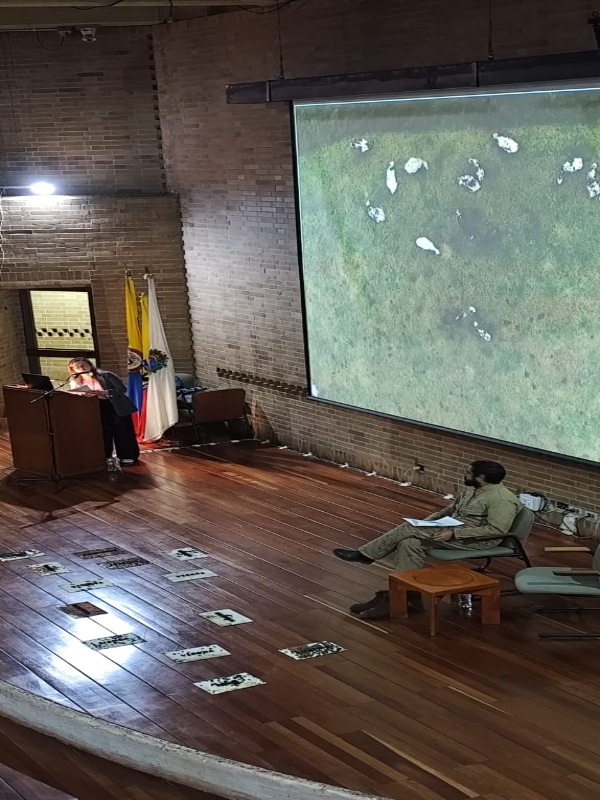
Interdisciplinary performance about bovine perspectives at the ESCOITE conference . Image by author.
Second day of congress.
We arrive at Maloka, an interactive techno-science museum run by the government. There were some small discussion forums, a mid-size project fair, and a few conferences in the dome cinema that resembles the communal buildings of Amazonian indigenous tribes. I had a great time at the project fair with undergraduate students sharing their ongoing investigations. Most of the projects were embedded in semilleros de investigación, a transversal modality common in Latin American universities. An established scholar applies for a research grant, often co-funded with NGOs, and rallies a team with other professors and students at different career stages. The conglomerate of skills and perspectives enriches the execution of the projects, which are often based on collaboration with informants. Again, I felt the ache of being a latecomer to the ESOCITE community, since my college days would have been immensely more amusing had I participated in fairs like this one.
I volunteered in a demonstration about the limits of declarative knowledge, with the paradigmatic case of the instructions for building a microscope. Robert Hooke would have been ashamed of my display of poor psychomotor abilities. Then we chatted with the students, almost in free-association fashion, about the wonders of 3D printers – a device that seems to conjure out of thin air robust materials. I also visited the stand of a preservation initiative of native crops and traditional recipes in rural communities. I was pleased to hear students articulating in their speech various heterogeneous issues: the menace of genetically altered seeds, legislation that protects agricultural corporations while persecuting artisan farmers, indigenous myths about ancient crops, gender stereotypes associated to the labor division between harvesting and cooking, the chemical composition of their gastronomy, and more. This project was also committed to democratic science communication, ranging from reading circles in public libraries to podcasts in local radio stations.
Alas, the dome conferences were not really interesting. Like others in the audience, I was allured by catchy titles and big names. But I was saddened to encounter self-celebrating ramblings about allegedly new forms of academic and political engagement. One should recall that ‘form’ is an unfortunate term with more than one problematic implication (Harman, 2019). At the dome we heard the war cries of two elderly physicians with multicultural sensibilities struggling with the health system, the prideful cheers of a postcolonial STS journal, and cautionary tales about the dangers of AI in social sciences. By the end, I ran into an old acquaintance and we ranted about the nagging moralist tone of some speakers. Yes, we know firsthand that the medical system is insensitive, that colonialism sucks, and that digital methods flirt with positivism. But what unsettled me the most was the ivory dome which severed our life in academia from the rest of the world, where more intriguing lifeforms dwell.
The best part of the day was the intimate forums held in tiny rooms packed with curious spectators. In the morning, we discussed regimes of energy transition in Latin America. A pressing issue where various incompatible conceptualizations of energy clashed. At one point, an NGO activist exclaimed: “energy is more than just electricity, but the governments only speak in terms of oil and solar panels”. Unfortunately, we ran out of time before we could hear more about that mysterious energetic surplus. In the afternoon, we explored different approaches to absence through olfactory ethnography (Pérez-Bustos & Ulloa-Garzón, 2026). One researcher, seeking to overcome the textual media so pervasive in science, explained that tactile and olfactory experiments required a momentary suspension of our usual cognitive framework – inquiry questions, states of the art, controlled variables, taxonomic categories, etc. Her colleague stressed the mingle of memories evoked by the clothes of a deceased loved one; an affective experience where glimpses of other places and times orbit an ephemeral smell. Expressions such as “immaterial”, “evanescent”, “ethereal”, “indescribable”, and others alike circulated alongside the aromatic garments.
On my way home, I thought of certain post-ANT authors (Teil & Hennion, 2004; Abrahamsson, 2015) who argued that bodies are enacted in multiple, partial ways through assorted non-human tools that enhance sensory processes. They lead to nuanced perceptions and sophisticated vocabularies in the connoisseurs of a given niche like gastronomy or melomania. Could this argument apply also to the quasi-mystical matters of concern discussed in the forums? Is it truly that smell has elusive properties that mischievously escape reasoning based on graphism? And what about the intangible substance lying beneath our metrological approaches to energy? Perhaps we have just begun to amplify the scope of our inquiries and therefore have not yet developed more adequate modes of textual formulation. We have already spent a great deal of time denouncing the invisibilization of severe entities and phenomena by conventional scientific theories. But I believe we are reaching the harvest point, in which we must figure out how to better articulate, describe, and make sense of our own divergent matters of concern.
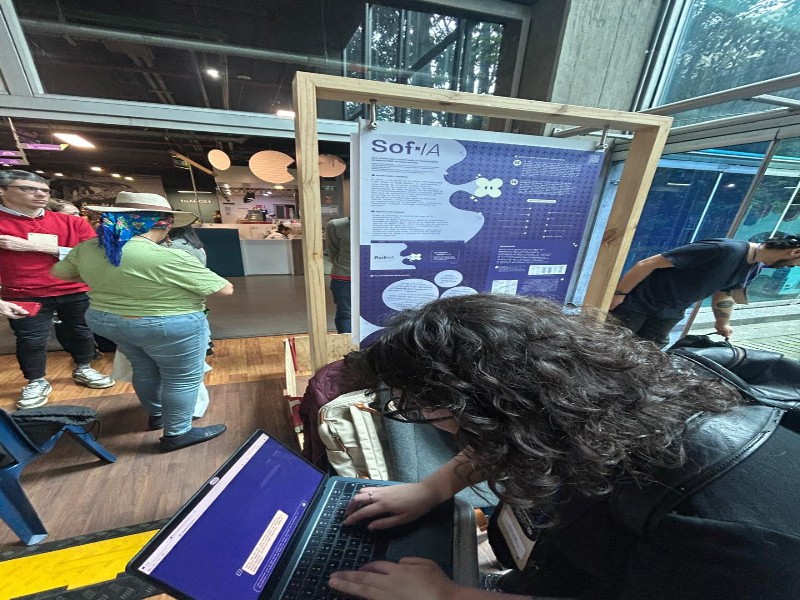
Posters from the project fair at the ESOCITE conference. Image by author.
Third Day of Congress
Back to the workshops. Even though there were also book presentations and live interviews, I had already ran out of steam. Why didn’t anyone tell me that auto-ethnography exercises would be so exhausting? Specially, given that my head was spinning around with unresolved questions from the last couple of days. Little I knew that the final day of ESOCITE would be the last nail of the coffin of my self-interrogations about methodological pluralism. By then I no longer feel as a complete stranger, yet I wouldn’t say I felt at home either. And to top it off, this final day was held in an unkown university which was fairly labyrinthine. While moving through long empty halls, trying to find the designated classrooms, I remembered that incarnated knowledge practices were nothing like the straight path of reason called by the Greeks as episteme and more like the crooked path of technical know-how denominated metis (Latour, 1999). And then I envisaged the title of this little piece: myself, a one-trick pony, hanging around with people who where bottomless bags of tricks.
Let me begin with the afternoon workshop, significantly less interactive due to the collective fatigue. First I saw a young PhD candidate exposing, in quite a cathartic tone, the painful reformulation of his project. Initially interested in the role of diagnose manuals in psychiatric training, then he moved to an inquiry about the incompatibility between Anglo-Saxon and Latin American classification systems. Secondly, I saw the serene philosopher of the first day denouncing the lack of analytic usefulness of overreaching concepts such as “hybrid”, “ensemble”, “composition”, and “cyborg”. And bitterly, I missed the last presentation about fermentation techniques and ethics of alcohol consumption. Overall, I appreciate the postcolonial initiatives, the academic rigor, and the return to craftsmanship. Three feats quite difficult for us, Latin American STS enthusiasts. We first ought to learn the canonical texts written in the Global North before getting acquainted with the work of our fellow countrymen. Many of us, coming from humanities and philosophies, are still embedded in meticulous exegesis of abstract books. But I fear academic rigor is not as rewarding as artisan cunning and practical intelligence.
But the real cleavage point of my wandering thoughts about heterogeneous methods was the morning workshop. Hosted by the dear smell ethnographers, it was a marathon of unimaginable presentations about fishing techniques, reversed engineering, speculative archaeology, board games, urban planning strategies, counter-narratives in gerontology, and much more. The wide diversity of professional backgrounds fascinated me. There were industrial designers, biologists, data scientists, journalists, and even veterinarians. Folks from social sciences were minority. The former group launched statements of the sort of “we have innovative methodologies at last” or “at least we are not spiraling into minutiae discussions of academic celebrities”. And, of course, those remarks made the latter group a bit uncomfortable. Perhaps I was mistaken when, back in the first day, I anticipated furious clashes between militants of critical theory and post-positivist researchers. The actual wrestle was between the new generation of people working at the intersection of politics, media studies, business management, and auto-fiction, on the one side, and old-fashioned humanists (art-oriented, though) on the other. I was clearly part of the second party, but I yearned to have the methodological versatility of the first one. But to my surprise and relief, the very scholar who dismissed textual regimes the day before, spoke in a conciliatory tone about the necessity of creating bridges between theory and experiments; meaning, to find a middle ground where the two types of STS scholars could live together. I guess cosmopolitics start at home, right (Stengers, 2018)?
Of course, I am in no position to claim, in a normative tone, what should be the future for STS as a field. I am solely an independent researcher, occasionally gravitating Latin American congresses. Albeit, we should not trust so blindly in conventional geography when it comes to academic production (Pérez-Bustos, Martínez-Medina & Mora-Gámez, 2018). The few paragraphs I wrote are not intended, by any means, as a diagnosis of the scientific community that has kindly welcomed me. Instead, this essay is an exercise of making sense of the tensions I felt in those three days. And, after talking to some other attendants, it seems like such tensions were not produced by my private neurosis, but they rather were almost palpable in the atmosphere. One of the reviewers of a first draft said that this piece was not properly an essay, but a ‘travelogue’ of the ESOCITE congress. I agree, and I like the label better. I hope that readers from distant latitudes might grasp the ambivalent affects I have tried to outline here, by drawing from their own experiences in overseas academic events. If so, then we can keep on creating a common word where many other, radically different worlds can be included.
But what do I mean by methodological pluralism? Certainly, this go beyond relinquishing demarcationism – what counts as legitimate knowledge and what doesn’t. It also must be something other than denouncing how mainstream science and politics mute a legions of human and non-human voices. I think STS have already succeeded at that. What lies in front of us is, truly, a question about the multiple languages, concepts, instruments, scales, procedures, gestures, and articulations we have at our disposal to relate to our matters of concern in their own terms – that is, respecting their ontological, epistemological, and pragmatical particularities. The objects of our inquiries are very sensitive to the way we approach them. They compel us to embark on convoluted, unpredictable journeys. If we don’t want to have a shipwreck, we must regularly stop to build trading zones of mutual intelligibility (Galison, 1997), since we cannot take for granted either the cohesion of STS as a field or the continuity of the beings inhabiting the cosmos. Would it be too grandiloquent to state that each academic enterprise must (re)create the entire world anew?
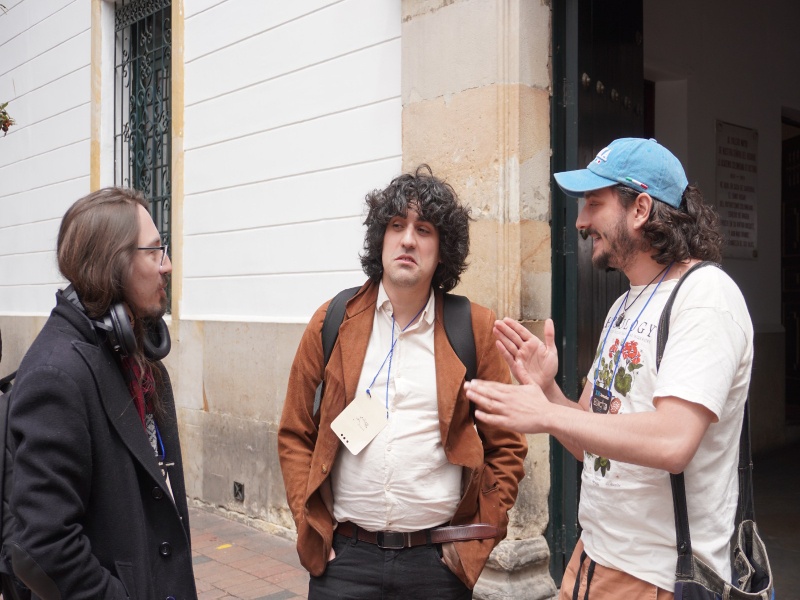
Photo of several people who attended the ESOCITE conference in Bogotá, Colombia. Image by author.
This post was curated by Contributing Editor Mauricio Rene Baez Alayon, with feedback from first reader Tien-Dung.
References
Abrahamsson, S., Bertoni, F., Mol, A., & Martín, R. I. (2015). Living with Omega-3: New Materialism and Enduring Concerns. Environment and Planning D: Society and Space, 33(1), 4-19. https://doi.org/10.1068/d14086p
Galison, P. (1997). Image and Logic. The University of Chicago Press.
Harman, G. (2019). Three Problems of Formalism: An Object-Oriented View. In D. Rudrum, R. Askin & F. Beckman (eds.) New Directions in Philosophy and Literature (198-214). Edinburgh University Press.
Latour, B. (1988). The Politics of Explanation: an Alternative. In S. Woolgar (ed.) Knowledge and Reflexivity (155-76). Sage.
Latour, B. (1999). Pandora’s Hope. Harvard University Press.
Pérez-Bustos, T., Martinez-Medina, S. & Mora-Gámez, F. (2018). What is “(un)making” STS ethnographies? Reflections (not exclusively) from Latin America. Tapuya, 1(1), 131-37. https://doi.org/10.1080/25729861.2018.1551825
Pérez-Bustos, T. & Ulloa-Garzón, A. (2026). Why Study Smell in Clothes? Platypus. The CASTAC Blog. https://blog.castac.org/2026/06/why-study-smell-in-clothes/
Stengers, I. (2018). The challenge of ontological politics. In: M. De la Cadena and M. Blaser (eds.) A World of Many Worlds (83-111). Duke University Press.
Teil, G. & Hennion, A. (2004). Discovering Quality or Performing Taste? A Sociology of the Amateur. In M. Harvey, A. McMeekin & A. Warde (eds.) Qualities of Food (19-37). Manchester University Press.