


Last week, we started looking into what it would mean for Airbus to stretch the A350-1000 into a version that more closely competes with the Boeing 777-9, which is nearing certification and first deliveries.
Airbus visited the subject before the A350-1000 entered service in 2016. After the initial strong sales of the Boeing 777-9, followed by years of certification delays and no further sales of the 777-9, Airbus did not follow through on a stretch of the A350-1000.
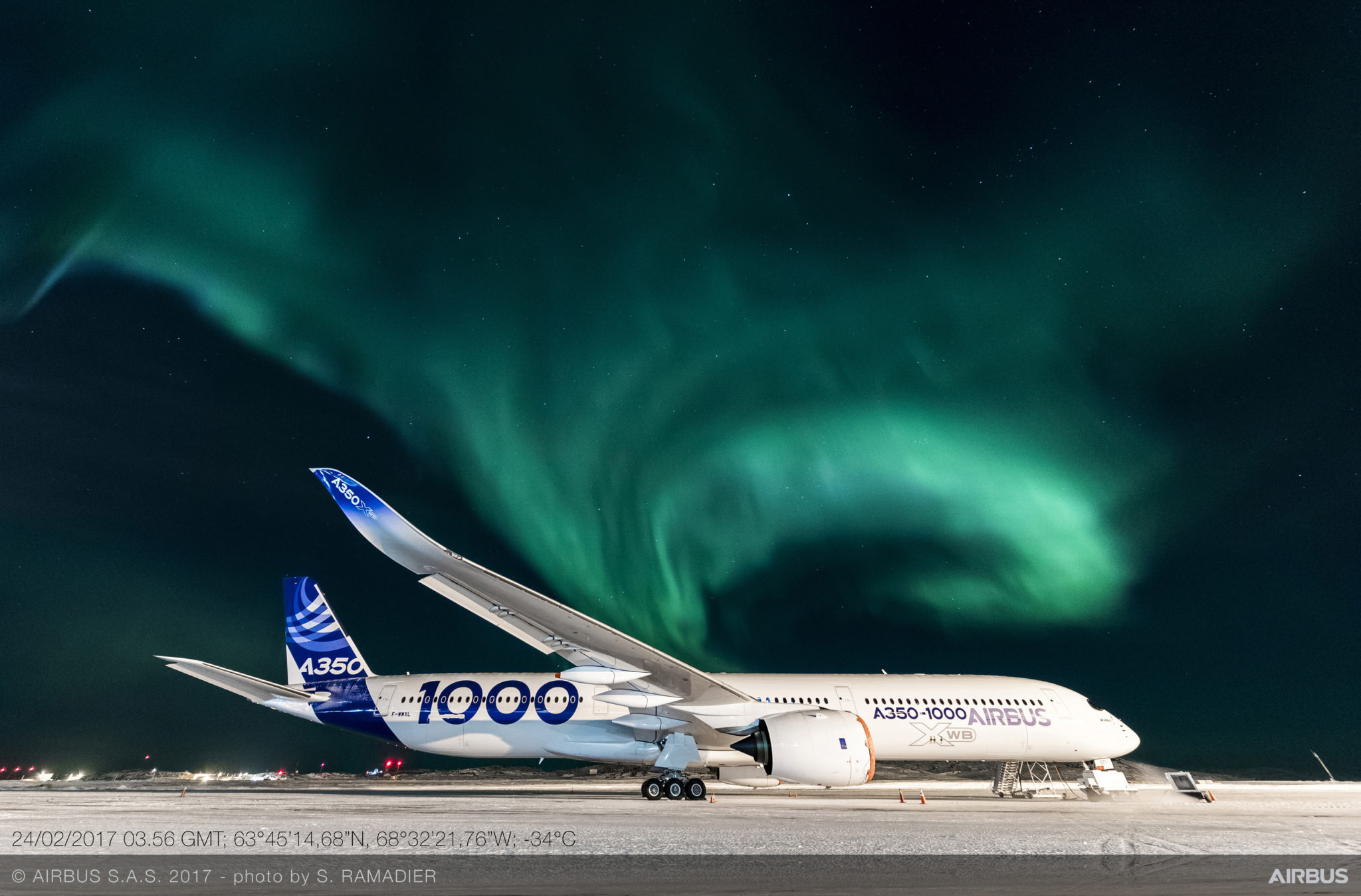
Figure 1. An A350-1000 prototype experiences Northern Lights during cold-weather testing. Photo credit: Airbus.
With Airbus’s latest development project, the A350F freighter, now in its finishing stages, its engineering teams could have time to take a second look at the A350-1000’s stretch into a version we call the A350-2000. The goal is to compete more aggressively with the Boeing 777-9 once it gets wind in its sails.
Depending on how the stretch is done, it can be a modest project or a more demanding one. We investigate what approach makes sense by applying the Leeham Aircraft Performance and Cost Model (APCM) to understand capabilities and work scopes involved for different A350-2000 alternatives.


