
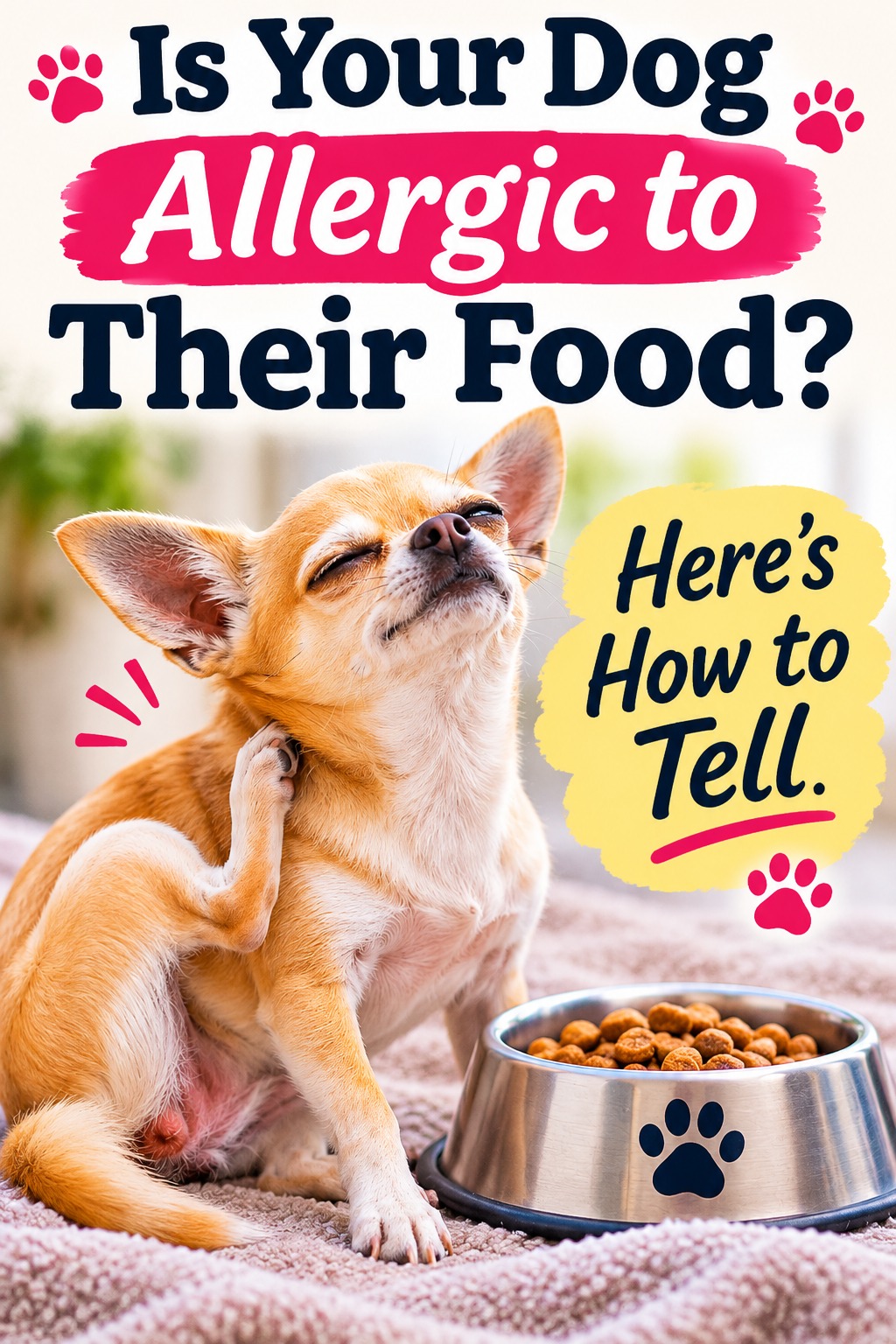
Is Your Dog Allergic To Their Food? Here’s How To Tell


As an Amazon Associate I earn from qualifying purchases. Learn More
Updated in November 2026
Does your dog constantly scratch, lick their paws, or struggle with recurring ear infections? You might be wondering if something in their food is causing the problem.

Just like people, dogs can develop allergies to certain foods. And while food allergies aren’t as common as environmental allergies, they can make your poor pup pretty miserable.
The tricky part is figuring out whether your dog’s symptoms are actually caused by food or something else.
Let’s look at the signs of food allergies in dogs, which ingredients are most likely to cause problems, and what you can do to help your furry friend feel better.

What Is a Food Allergy in Dogs?
A food allergy happens when your dog’s immune system mistakenly identifies an ingredient in their food as something harmful.
The immune system reacts to that ingredient, causing symptoms such as itchy skin, ear infections, or digestive problems.
Most food allergies involve proteins, although dogs can develop reactions to other ingredients, too.
And here’s something that surprises many dog parents: Your dog can suddenly develop an allergy to food they’ve been eating for years!
Food allergies can develop at almost any age, so don’t assume your senior Chihuahua couldn’t possibly be allergic to their favorite food.
Signs Your Dog May Have a Food Allergy
Food allergies can cause several different symptoms. Some dogs have mostly skin problems, while others experience digestive issues.
Here are some of the most common warning signs.
1. Constant Itching and Scratching
One of the most common symptoms of food allergies in dogs is itchy skin.
Your dog may scratch constantly, rub against furniture, or chew at certain areas of their body.
Common itchy spots include:
- Paws and between the toes
- Ears
- Face
- Belly
- Groin and rear end
Some dogs scratch so much that they develop red, irritated skin, hair loss, or painful sores.
If your Chihuahua is constantly licking their paws or scratching even when flea season is over, it’s worth discussing possible allergies with your veterinarian.

2. Recurring Ear Infections
Does your dog seem to get one ear infection after another?
Food allergies can contribute to recurring ear problems, especially when inflammation makes the ears more vulnerable to yeast or bacterial infections.
Watch for:
- Frequent head shaking
- Scratching at the ears
- Redness inside the ears
- An unpleasant odor
- Dark or unusual discharge
- Sensitivity when you touch their ears
Of course, ear infections can have several causes, so don’t automatically assume food is responsible.
Your veterinarian can examine the ears and determine whether an infection needs treatment.
3. Digestive Problems
Some dogs with food allergies experience digestive issues, including:
- Vomiting
- Diarrhea
- Frequent bowel movements
- Excessive gas
- Stomach discomfort
However, these symptoms don’t always mean your dog has a food allergy.
Digestive problems can also be caused by food intolerance, parasites, infections, or other medical conditions.
If your dog frequently has an upset stomach, your veterinarian can help determine what’s going on.
4. Red, Irritated Skin and Hot Spots
Constant scratching and licking can damage your dog’s skin.
You might notice red patches, scabs, hair loss, or moist, irritated areas commonly called hot spots.
Some dogs also develop recurring bacterial or yeast skin infections.
These problems can be painful and may require medication in addition to addressing the underlying allergy.
5. Symptoms That Continue Year-Round
Environmental allergies often get worse during certain seasons, especially when pollen counts are high.
Food allergies, on the other hand, commonly cause symptoms throughout the year because your dog continues eating the same ingredients.
However, environmental allergies can also be year-round, so this clue alone isn’t enough to diagnose a food allergy.

What Foods Are Dogs Most Commonly Allergic To?
Many people assume grains are the biggest problem in dog food, but that’s not necessarily true.
Some of the more commonly reported food allergens in dogs include:
- Beef
- Chicken
- Dairy products
- Eggs
- Wheat
- Soy
Other ingredients can cause allergies, too. Every dog is different.
It’s also important to understand that an ingredient isn’t necessarily bad just because some dogs are allergic to it.
For example, chicken is a perfectly healthy protein source for many dogs. But if your dog is allergic to chicken, even a small amount may cause symptoms.
Are Grain-Free Dog Foods Better for Allergies?
Not necessarily!
Many dog parents switch to grain-free food because they assume grains are causing their dog’s itching.
But protein allergies are more common than grain allergies.
A grain-free food might still contain beef, chicken, or another ingredient that triggers your dog’s symptoms.
Grain-free diets also aren’t automatically healthier. The FDA has investigated a possible association between certain diets, including some grain-free diets, and a heart condition called dilated cardiomyopathy (DCM).
Before switching to a grain-free diet, talk with your veterinarian about whether your dog actually needs one.
Food Allergy vs. Food Intolerance: What’s the Difference?
Although people often use these terms interchangeably, food allergies and food intolerances aren’t exactly the same.
A food allergy involves the immune system reacting to an ingredient in your dog’s food.
A food intolerance doesn’t involve the same immune response. Instead, your dog may have difficulty digesting or tolerating a particular food.
For example, a dog that develops diarrhea after drinking milk might be lactose intolerant rather than allergic to dairy.
Both conditions can cause digestive problems, which makes them difficult to tell apart without veterinary guidance.
How Do You Find Out If Your Dog Has a Food Allergy?
Unfortunately, there isn’t a simple, reliable blood test that can tell you exactly which foods your dog is allergic to.
Commercial hair, saliva, and blood allergy tests marketed for diagnosing food allergies haven’t been shown to be consistently accurate.
The most reliable method is something called an elimination diet trial, followed by a controlled food challenge.
This process takes patience, but it can help identify whether food is actually responsible for your dog’s symptoms.
How an Elimination Diet Works
An elimination diet involves feeding your dog a carefully selected diet that avoids the ingredients they may be reacting to.
Your veterinarian will usually recommend one of two options.
1. A Novel Protein Diet
A novel protein diet contains a protein source your dog hasn’t eaten before.
For example, if your dog has always eaten chicken and beef, your veterinarian might recommend a food containing a different protein.
The important thing is choosing ingredients your dog hasn’t previously been exposed to.
2. A Hydrolyzed Protein Diet
Hydrolyzed diets contain proteins that have been broken down into very small pieces.
This makes them less likely to trigger an immune response.
These diets are often available through your veterinarian and can be especially helpful when your dog has eaten many different protein sources over the years.
How Long Does an Elimination Diet Take?
Most veterinarians recommend feeding the special diet exclusively for about 8 to 12 weeks, although your veterinarian may adjust the length based on your dog’s symptoms.
During that time, your dog generally cannot have:
- Regular dog treats
- Table scraps
- Flavored chews
- Dental treats
- Food belonging to other pets
- Flavored supplements or medications unless approved by your veterinarian
Even a tiny amount of the wrong ingredient can interfere with the results.
And if you have multiple dogs, you’ll need to be especially careful that your pup doesn’t sneak a bite from another dog’s bowl!
Never stop prescribed medications on your own. Your veterinarian can help find appropriate alternatives if a flavored medication interferes with the diet trial.
What Happens After the Elimination Diet?
If your dog’s symptoms improve, that’s encouraging, but it doesn’t automatically prove they have a food allergy.
Your veterinarian may recommend carefully reintroducing their previous food to see whether symptoms return.
This is called a food challenge.
If symptoms return after the old food is reintroduced and improve again when it’s removed, that provides much stronger evidence of a food allergy.
Your veterinarian can then help determine which ingredients need to be avoided.
Don’t attempt a food challenge without veterinary guidance, especially if your dog has experienced a severe reaction.
Can You Make Homemade Food for a Dog With Allergies?
You can, but it requires some planning.
Homemade diets can be helpful in certain situations because you have control over the ingredients.
However, simply feeding your dog cooked chicken, beef, or another meat isn’t a complete and balanced diet.
Dogs need the right combination of protein, fats, vitamins, minerals, and other nutrients to stay healthy.
This is particularly important for growing puppies and dogs with medical conditions.
If you want to prepare homemade meals for your allergic dog, ask your veterinarian about working with a board-certified veterinary nutritionist.
They can help create a diet that avoids problem ingredients while still providing everything your dog needs.
What About Hypoallergenic Dog Food?
You may have noticed dog foods labeled “hypoallergenic,” “limited ingredient,” or “sensitive skin and stomach.”
These products can be helpful for some dogs, but the labels don’t guarantee that the food is appropriate for diagnosing a food allergy.
Over-the-counter limited-ingredient diets may contain traces of proteins not listed as main ingredients because of manufacturing processes.
That’s one reason veterinarians often recommend specially formulated therapeutic diets during an elimination trial.
Once your dog’s specific allergies have been identified, your veterinarian can help you find a suitable long-term food.
Can Dog Food Allergies Be Cured?
Unfortunately, there isn’t currently a reliable cure for most food allergies in dogs.
The good news is that they can often be managed successfully!
Once you identify the ingredient causing the problem, avoiding it may dramatically improve your dog’s comfort.
You may also need to check labels on treats, supplements, and flavored medications.
And remember that some dogs have both food allergies and environmental allergies.
If your dog continues scratching after their food allergy is under control, there may be another allergy or skin condition that needs attention.
When Should You Take Your Dog to the Vet?
If your dog has persistent itching, recurring ear infections, frequent vomiting, or ongoing diarrhea, schedule a veterinary appointment.
Don’t wait until your dog has scratched their skin raw or developed a painful infection.
Your veterinarian can check for other possible causes, such as fleas, mites, bacterial infections, or environmental allergies.
Seek emergency veterinary care immediately if your dog develops difficulty breathing, collapses, or experiences sudden severe swelling of the face or throat.
These symptoms can indicate a serious allergic reaction or another medical emergency.
Frequently Asked Questions About Dog Food Allergies
Can a dog suddenly become allergic to food they’ve eaten for years?
Yes! Dogs can develop food allergies even after eating the same food for a long time. A food that never caused problems before can eventually become an issue.
How long does it take for food allergy symptoms to go away?
Some digestive symptoms may improve within a couple of weeks after the problem ingredient is removed. Skin symptoms often take longer, which is why elimination diet trials commonly last 8 to 12 weeks.
Is chicken a common food allergy in dogs?
Yes. Chicken is one of the more commonly reported food allergens in dogs. However, most dogs can eat chicken without any problems, so there’s no reason to avoid it unless your dog has a confirmed allergy or your veterinarian recommends doing so.
Can food allergies cause a dog to lick their paws?
Yes. Itchy paws and excessive paw licking can be signs of food allergies. However, environmental allergies, infections, injuries, and other conditions can cause the same behavior.
Are Chihuahuas more likely to have food allergies?
Chihuahuas can develop food allergies just like other breeds, but there isn’t strong evidence that they are especially prone to food allergies compared with dogs in general.
Will switching dog food stop my dog’s itching?
It might, but only if food is actually causing the problem and the new diet avoids the triggering ingredient. Randomly switching brands often doesn’t help because many dog foods contain similar ingredients.
Final Thoughts
Watching your dog scratch constantly or struggle with an upset stomach is no fun, especially when you don’t know what’s causing it.
If you suspect your Chihuahua or other dog has a food allergy, the best place to start is with your veterinarian.
A carefully planned elimination diet can help you determine whether food is the problem without spending months switching from one dog food to another.
And once you know which ingredients your dog needs to avoid, keeping them comfortable can become much easier.
Does your dog have food allergies? What symptoms did you notice, and how did you figure out what was causing them? Share your experience in the comments below. We’d love to hear your story!


Pet Blogger
I have had dogs all my life. I have been a pet groomer, worked in a pet hotel, and a kennel, and have bred and showed dogs.
Dr. Sara Ochoa
DVM
This article has been fact-checked and approved by Dr. Sara Ochoa DVM. You can read more about her on our About page.
https://ilovemychi.com/wp-content/uploads/2017/09/Is-Your-Dog-Allergic-To-Their-Food.jpg
Views: 7,245


