
Protecting Your Tenant’s Right to Privacy: A Guide for Landlords


Protecting your tenant’s right to privacy is vital in owning and managing rental properties. As such, landlords and Philadelphia property managers must ensure legally compliant practices to protect each tenant’s privacy. In today’s article, we’ll review a tenant’s right to privacy, the landlord’s responsibilities to protect tenants, and the consequences for violating a tenant’s right to privacy.

Main Takeaways
- Tenants generally have a right to privacy and quiet enjoyment of their rental home, while landlords may still enter for legitimate reasons allowed by the lease and applicable law.
- Landlords should protect tenants’ personal information, follow local notice requirements before entering a rental, and take reasonable steps to keep the property secure.
- Privacy and landlord-entry rules vary by location, so landlords should check state and local requirements instead of relying on one notice rule for every rental.
- If a tenant believes their landlord has entered without proper authorization, documenting each incident, raising concerns in writing, and — if the problem continues or feels unsafe — contacting the local housing authority or law enforcement are the practical next steps.
What Is a Tenant’s Right to Privacy?
A tenant’s right to privacy refers to their legal right to enjoy privacy within their rented dwelling without interference or surveillance by the landlord or property manager. Generally, tenants have the right to possess and control their rental units, and landlords must follow applicable notice and access requirements before entering, except in emergencies or other circumstances allowed by law.

Additionally, tenants have the right to privacy regarding their personal information. For instance, any personal information, such as a Social Security number, credit history, and other identifying information shared during the screening process must be kept confidential and secure by the landlord or Philadelphia property manager.
Landlords and property managers should also respect a tenant’s privacy inside the rental unit. They should only enter for legitimate reasons allowed by the lease and applicable law and follow any required notice procedures.
Overall, tenants have the right to privacy in their rental units and their personal information. However, if a landlord violates a tenant’s right to privacy, the tenant may have grounds to legally protect their rights.
Landlord Responsibilities to Protect Tenant Privacy
Landlords and Philadelphia property managers must understand and respect each tenant’s right to privacy. Protecting tenant privacy not only helps to maintain good relationships with tenants but also helps to ensure you’re complying with legal requirements. That said, here are some of the main responsibilities that landlords have to protect their tenant’s privacy.
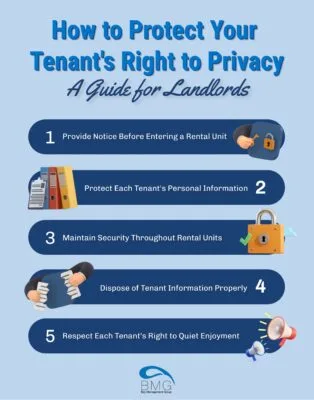
- Providing Notice Before Entering the Unit
- Protecting Personal Information
- Maintaining Rental Property Security
- Properly Disposing of Tenant Information
- Respecting Tenant’s Quiet Enjoyment
Providing Notice Before Entering the Unit
Landlords must provide tenants with adequate notice in accordance with the requirements that apply where the rental property is located. That said, notice requirements vary by location. In Philadelphia, landlords generally must give tenants at least 24 hours’ notice before entering the property, except in emergencies. Landlords should also follow any applicable requirements regarding the reason, timing, and method of entry.
Protecting Personal Information
Landlords and property managers may collect personal information from applicants and tenants during the application and screening process. Depending on the screening process, this may include information used to verify identity, income, credit history, and rental history. Landlords should use appropriate safeguards for both physical and electronic records and limit access to people who have a legitimate need for the information. They should only disclose personal information when permitted or required by applicable law or when reasonably necessary for legitimate property management purposes.
Maintaining Rental Property Security
Property managers and landlords have responsibilities for maintaining certain safety and security features of a rental property as required by applicable law. Protecting each unit includes taking measures to prevent unauthorized access to the property. For instance, landlords should maintain required locks and other property security features and address known security-related maintenance issues in accordance with applicable law.
Properly Disposing of Tenant Information
Landlords should securely dispose of tenant personal information when they no longer have a legitimate legal or business reason to retain it. Depending on the type of record, certain documents may need to be kept for a specific period. When disposal is appropriate, landlords should use secure methods, such as shredding physical documents and securely deleting electronic records.

Respecting Tenants’ Quiet Enjoyment
Finally, tenants have the right to quiet enjoyment of a rental unit. The right to quiet enjoyment generally means that tenants can use and enjoy their rental property without unreasonable interference from the landlord, subject to the lease and applicable law.
Additionally, landlords who include utilities may not affect habitability by failing to pay utility bills or shutting off utilities. If repairs require a temporary utility shutoff, landlords should provide any notice required by applicable law and give tenants advance notice when reasonably possible.
Common Privacy Concerns in a Rental
As a landlord or property manager, it’s crucial to understand the common privacy concerns that tenants may have and take steps to address them. Here are some of the most common privacy concerns tenants may have while living in a rental unit.
- Landlord Entry
- Personal Information
- Repairs and Maintenance
Landlord Entry
Tenants may be concerned about landlords or property managers entering their homes without warning. Landlords should understand when they have the right to enter, provide any notice required by applicable law, and avoid unnecessary or unreasonable entry. Clear communication about inspections, repairs, and other visits can also help prevent misunderstandings.

Personal Information
Tenants may be wary about disclosing their personal information, like their Social Security number or other identifying data, to their landlord or property manager. To address any concerns, landlords should only ask for the necessary information during the rental process and ensure the data is kept confidential and secure. Also, landlords should explain to tenants why they need the information and how it’ll be used.
Repairs and Maintenance
Tenants may worry that landlords will access their rental unit without prior notice or permission. As such, landlords should follow applicable notice and entry requirements before accessing a rental unit for repairs or maintenance. Emergency situations may allow entry without the usual advance notice. Additionally, landlords should explain the reasons for any repairs or maintenance work and provide an estimate of how long it’ll take to complete.
Consequences of Violating a Tenant’s Right to Privacy
As a landlord, violating a tenant’s right to privacy can have several serious consequences. For instance, tenants can take legal action, potentially damaging a landlord’s reputation as a rental owner. Depending on the circumstances and applicable law, violating a tenant’s privacy or improperly entering a rental property may lead to legal remedies, damages, penalties, or other consequences.
Some conduct involving a tenant’s privacy may also violate criminal laws, depending on what occurred and the law in that jurisdiction. However, an improper landlord entry does not automatically amount to a criminal offense. Landlords should follow applicable access laws and seek legal guidance when they are unsure about their right to enter a rental unit.
Finally, landlords who violate tenant privacy laws may be subject to fines and penalties. The specific remedies and penalties depend on the jurisdiction and the circumstances of the violation. First, however, it’s important to research your local landlord-tenant laws to ensure you follow best practices in your rental property.
A Note for Tenants: What to Do If a Landlord Enters Without Permission
Most of the guidance above speaks to landlords and property managers. But tenants who believe a landlord has entered without proper authorization also have options, and taking a few organized steps can make a real difference if the issue escalates or legal action later becomes necessary.
1. Document each entry. Start keeping a record the first time it happens. Note the date, time, and any details about what occurred — what was moved, left open, or out of place. Take photos or videos where you can. Save any text messages, emails, or other written communication from the landlord that confirms or contradicts the entry. A clear, dated record is the single most useful thing a tenant can hold onto.
2. Raise it with the landlord directly. Sometimes landlords don’t realize they’ve overstepped, especially if lease terms or local notice requirements weren’t clear. A polite but firm conversation — in person or in writing — can clarify expectations, remind both sides of any notice requirements in the lease or local law, and often resolves the issue without further escalation.
3. Send a formal written notice if the problem continues. If entries keep happening, put concerns in writing by certified mail or email, citing the specific lease provisions or applicable rules being violated and requesting that the landlord follow proper notice and access procedures going forward. This creates an official record of the complaint, which matters if the issue later needs to be reviewed by an outside party.
4. Know when to escalate. Repeated unauthorized entries without a legitimate reason may constitute harassment under applicable law. A tenant can file a complaint with the appropriate local housing authority or seek guidance from a tenant rights organization or qualified attorney. If any entry becomes threatening or makes a tenant feel unsafe, contacting law enforcement is appropriate.
The specific remedies available depend on the type of violation, the lease, and the law where the rental property is located, so tenants with serious concerns should consider consulting a qualified local attorney.
FAQs About a Tenant’s Right to Privacy
Tenant privacy rules can affect everything from property inspections to maintenance visits and handling personal information. Since landlord-tenant laws vary by location, landlords should understand the rules that apply where their rental property is located.
Can a Landlord Enter a Rental Property Without the Tenant’s Permission?
Sometimes. Landlords may have the right to enter for reasons such as repairs, inspections, emergencies, or showing the property to prospective tenants or buyers. However, notice and entry requirements vary by state and local law, so landlords should check the rules that apply to their property.
How Much Notice Does a Landlord Have to Give Before Entering?
There is no single notice period that applies to every rental property. Some jurisdictions require a specific amount of advance notice, while others use a reasonable-notice standard or address entry through the lease. Emergencies may also allow entry without advance notice.
Can a Landlord Enter a Rental Property in an Emergency?
Generally, landlords may enter without the usual advance notice when there is a genuine emergency, such as a fire, major water leak, or another situation requiring immediate action to protect people or property. The exact rules depend on applicable state and local law.
What Tenant Information Should Landlords Keep Private?
Landlords commonly handle sensitive information such as Social Security numbers, credit information, income documents, identification records, and rental applications. They should take reasonable steps to secure this information and limit access to people who have a legitimate need for it.
What Can a Tenant Do if a Landlord Violates Their Privacy?
The options depend on the type of violation and local law. A tenant may document the issue, notify the landlord, file a complaint with an appropriate agency, or pursue legal remedies when available. Repeated or serious violations may have additional consequences.
Protect Your Tenants With Property Management
Protecting your tenant’s right to privacy is crucial when you own and manage rental properties. Whether you own one property or one hundred rentals, you must treat each applicant and tenant fairly. That said, keeping track of each tenant’s information, requests, and payments can be challenging, especially if you own several rentals.
If you’re having trouble keeping up with each rental’s maintenance, payments, inspections, and more, it may be time to hire a property management team. Luckily, Bay Property Management Group has the expertise and professionalism to help you out. We’ve got you covered whether you need help marketing your rental, screening tenants, coordinating maintenance, collecting rent, or managing other day-to-day responsibilities. Contact BMG today to learn more about our comprehensive services.


