

Electric flossers for teeth promise a cleaner mouth with less effort than string floss. That matters, because a CDC-led analysis of national survey data found that only about 30% of U.S. adults aged 30 and older floss every day. If manual floss feels slow, awkward, or painful, a powered tool may be the push you need to clean between your teeth daily.
This guide explains the main types of electric flossers for teeth, how they work, what the research says, and how to choose the right one for your mouth, your budget, and your routine.
Key Takeaways
- Electric flossers for teeth include water flossers, air flossers, and powered floss or brush-tip devices.
- Water flossers have the most research and the widest choice of models in the U.S.
- A Waterpik-funded 2013 trial found a water flosser cut whole-mouth plaque by 74.4%, versus 57.7% for string floss.
- Air flossers are fast and compact, but they have less independent research.
- The best electric flosser is one you will use once a day, every day.
What Are Electric Flossers for Teeth?
Electric flossers for teeth are powered devices that clean between your teeth and along the gumline. Instead of sliding a thin string between each tooth, you guide a tip that does the work with water, air, or vibration.
They are sometimes called power dental flossers, automatic flossers, or interdental cleaners. Most run on a rechargeable battery or plug into the wall. Their main goal is the same as string floss: remove plaque and food from spaces your toothbrush cannot reach.
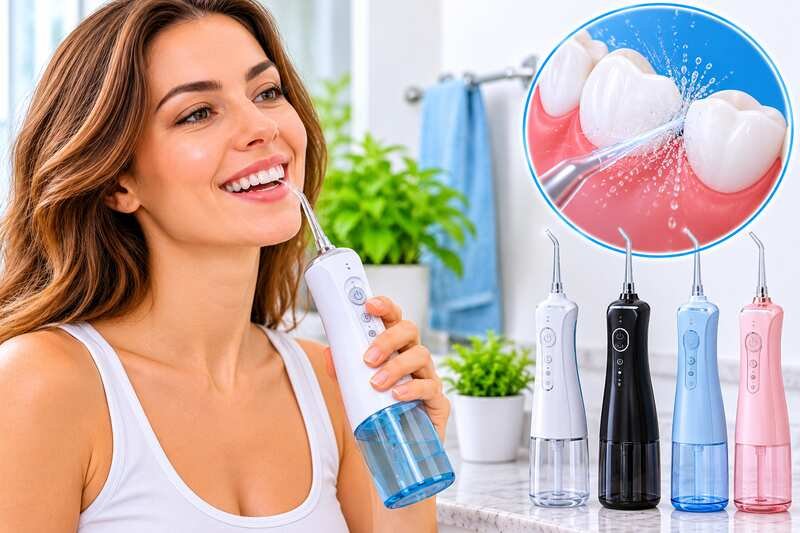
Photo: Raimond Spekking / Wikimedia Commons (CC BY-SA 4.0)
Types of Electric Flossers for Teeth
There are four main types of electric flossers for teeth. Each works a little differently and suits different needs.
| Type | How it cleans | Best for | Watch out for |
|---|---|---|---|
| Countertop water flosser | Pulsing water stream from a base | Braces, implants, home use | Needs counter space and an outlet |
| Cordless water flosser | Pulsing water from a handheld tank | Travel, showers, small bathrooms | Smaller tank, fewer settings |
| Air flosser | Bursts of air plus water droplets | Fast daily cleaning | Less research, fewer models |
| Powered floss or brush tip | Vibrating floss or tiny bristles | People who like the feel of floss | Fewer options in stores |
Countertop Water Flossers
Countertop water flossers are the most powerful electric flossers for teeth. A motor in the base pumps water through a hose to a handheld tip. Most offer around 10 pressure settings and a reservoir that holds enough water for 90 seconds or more.
They are a top pick for braces, implants, crowns, and bridges. The trade-off is size. You need counter space and an outlet near the sink. See our list of water flossers recommended by dentists for proven countertop models.
Cordless Water Flossers
Cordless water flossers put the pump, battery, and tank into one handheld unit. They are easy to pack and many can be used in the shower. Tanks are smaller, so some models need a quick refill to finish your whole mouth.
If you travel often or have a small bathroom, compare our picks for the best water flosser cordless models.
Air Flossers
Air flossers fire a quick burst of air and fine water droplets between each tooth. A full session can take under a minute. Philips ran a four-week, randomized trial of its Sonicare AirFloss in 148 adults with moderate gingivitis, using it alongside a manual toothbrush. You can read the Philips AirFloss study summary, but keep in mind it was brand-run.
Overall, air flossers have less independent research than water flossers, and fewer models are sold today. They suit people who want speed and minimal mess.
Powered Floss and Brush-Tip Devices
Some electric flossers for teeth vibrate a short piece of floss or a tiny brush tip. They feel closer to manual flossing, but the motor does the back-and-forth motion. These devices are less common in U.S. stores, and research on them is limited.
How Do Electric Flossers for Teeth Work?
Most electric flossers for teeth rely on pulsation and pressure. A water flosser sends hundreds to thousands of pulses per minute. The rapid on-off pattern helps loosen plaque, while the water flushes debris out from between teeth and just below the gumline.
Air flossers use speed instead of volume. A short, high-velocity burst carries tiny droplets into the gap between teeth. Powered floss tips rely on vibration to scrub tooth surfaces.
In every case, the device does the hard part, so you only need to guide the tip along your gumline.
Do Electric Flossers for Teeth Really Work?
Yes, for most people, electric flossers for teeth are an effective way to clean between teeth. The strongest research is on water flossers.
In a 2013 randomized trial of 70 adults, a water flosser plus a manual toothbrush reduced whole-mouth plaque by 74.4%, compared with 57.7% for string floss plus a toothbrush. You can read the study abstract on PubMed. The trial was funded by Waterpik, so treat it as useful but not neutral evidence.
Independent reviews are more cautious. They suggest oral irrigators may reduce gum inflammation in the short term, but long-term data is limited. The takeaway is simple: electric flossers work well when you use them daily, alongside brushing and regular dental checkups. For the full evidence, read do water flossers work.
Electric Flossers for Teeth vs String Floss
How do electric flossers for teeth compare with string floss in daily life? Here is a side-by-side look.
| Factor | Electric flosser | String floss |
|---|---|---|
| Ease of use | Easy after about a week | Hard for many people |
| Braces and implants | Excellent | Slow and fiddly |
| Tight contacts | Good | Excellent |
| Gum comfort | Gentle on low settings | Can cut gums if snapped |
| Upfront cost | Moderate to high | Very low |
| Portability | Cordless models travel well | Very portable |
Many dentists suggest a mix. Use an electric flosser daily, and use string floss on very tight spots a few times a week. Read our full comparison of water flosser vs floss for details.
Who Should Use Electric Flossers for Teeth?
Electric flossers for teeth help almost anyone who struggles to floss daily. They are especially useful if you:
- Wear braces or aligner attachments. Water reaches around brackets and wires that string floss catches on.
- Have implants, crowns, or bridges. A specialty tip can clean the edges where plaque collects.
- Have arthritis or limited hand strength. You only need to hold the handle and guide the tip.
- Have sensitive or bleeding gums. Low settings feel gentler than snapping floss.
- Skip flossing because it is a hassle. A faster, easier tool makes the habit stick.
If you have braces, start with our guide to the best water flosser for braces.
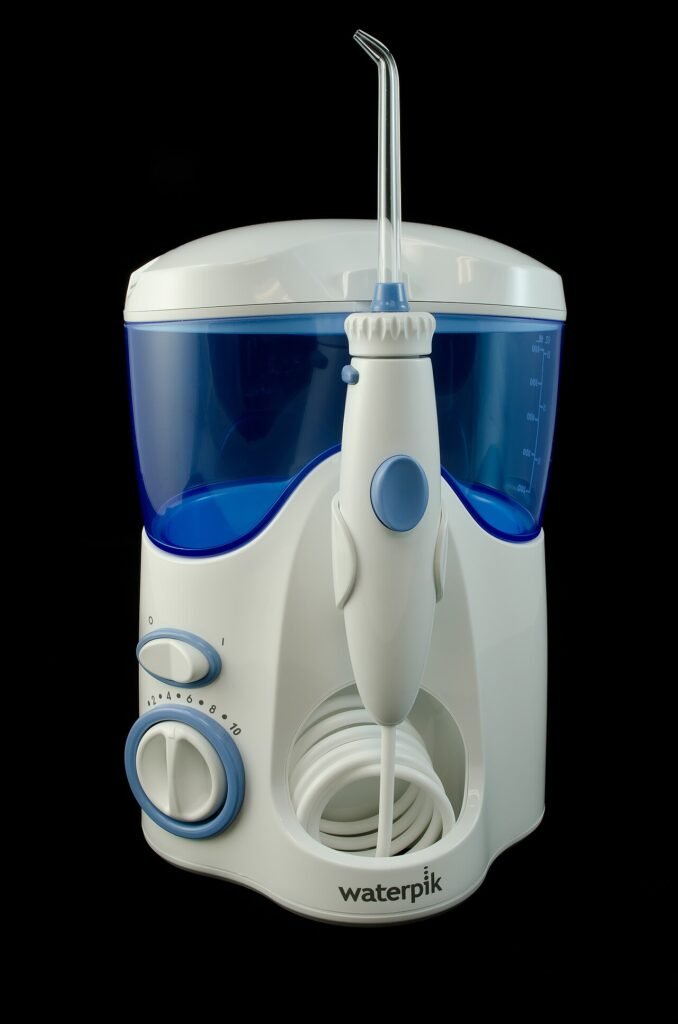
Photo: Waterpik Inc. / Wikimedia Commons (CC0)
How to Choose Electric Flossers for Teeth
Use these points to compare electric flossers for teeth before you buy.
1. Pressure Settings
Look for a wide range, especially at the low end. Beginners and people with sensitive gums should start gently. Countertop models usually offer about 10 settings, while cordless models often have 2 to 5.
2. Tank Size and Flossing Time
A tank that covers 60 to 90 seconds lets you clean your whole mouth without refilling. Countertop units hold the most water.
3. Tips Included
More tips give you more flexibility. Common options include a standard jet tip, an orthodontic tip for braces, a plaque-seeking tip for implants, and a toothbrush tip.
4. Power Source
Plug-in units give steady power. Cordless units offer freedom and shower use. Check the battery life and whether a wall adapter is included.
5. ADA Seal of Acceptance
The American Dental Association reviews safety and efficacy data before granting its seal. Several Waterpik and Philips Sonicare flossers carry it.
6. Warranty and Support
Warranties usually run from one to three years. A longer warranty is a good sign of build quality and support.
What Is an Electric Flosser Starter Kit?
Many shoppers search for an electric flosser starter kit. In most cases, this simply means a flosser that comes with everything a beginner needs in one box. A good starter kit for electric flossers for teeth usually includes:
- The flosser itself, either countertop or cordless
- At least two or three tips, such as a standard and an orthodontic tip
- A charging cable or base, ideally with a wall adapter
- A travel bag or case for cordless models
- A clear quick-start guide with pressure tips for beginners
If a kit only includes one tip, plan to buy a tip pack separately. Most brands recommend replacing tips every three to six months.
How to Use Electric Flossers for Teeth
Good technique makes electric flossers for teeth far more effective. Follow these steps for a water flosser, the most common type.
- Fill the tank with lukewarm water.
- Start on the lowest setting for your first week.
- Lean over the sink and put the tip in your mouth before turning it on.
- Close your lips slightly to limit splashing, and let water drain into the sink.
- Aim the tip at the gumline at a 90-degree angle.
- Move tooth by tooth, pausing briefly between each one.
- Turn it off before removing it from your mouth.
Most people need about 60 seconds. Light bleeding in the first week is common as gums adjust. For more detail, read our guide on how to use a water flosser.
Photo: electricteeth / Wikimedia Commons (CC BY 2.0)
Electric Flossers for Teeth by Need
Not every model suits every mouth. Use this table to match electric flossers for teeth to the situation you are most likely to face.
| Your need | Best type | Why it fits |
|---|---|---|
| First time using a flosser | Countertop water flosser | Many low settings make it easy to start gently |
| Braces or aligner attachments | Water flosser with orthodontic tip | Cleans around brackets in less time than threading floss |
| Dental implants | Water flosser with plaque-seeking tip | Gentle on the gumline around the implant |
| Small bathroom | Cordless water flosser | No hose or base on the counter |
| Frequent travel | Cordless or air flosser | Compact, rechargeable, easy to pack |
| Fastest possible routine | Air flosser | Short bursts finish the job in under a minute |
| Prefer the feel of floss | Powered floss device | Mimics string floss without the finger work |
How Much Do Electric Flossers for Teeth Cost?
Prices change often, so check current listings before you buy. In general, electric flossers for teeth fall into three tiers:
- Budget models: basic cordless flossers with a few settings and a small tank. Good for trying water flossing without a big commitment.
- Mid-range models: brand-name cordless flossers or entry countertop units with more settings, more tips, and longer warranties.
- Premium models: countertop flossers with 10 settings, smart modes, or toothbrush combos, often with two- to three-year warranties.
Remember to budget for replacement tips. Most brands suggest a new tip every three to six months, and tip packs are a small but regular cost. Even so, a good electric flosser can cost less over time than buying single-use floss picks every month.
Care and Maintenance Tips
Look after your electric flosser so it stays hygienic and works well for years.
- Empty the tank after each use and leave the lid open to dry.
- Rinse with plain water after using mouthwash.
- Wash the tank weekly, or on the top rack of the dishwasher if allowed.
- Descale monthly with diluted white vinegar if you have hard water.
- Replace tips every three to six months, or sooner if they look worn.
Common Mistakes to Avoid
Avoid these mistakes when you start using electric flossers for teeth:
- Starting on high pressure. It can sting and make you quit.
- Rushing. Spend about a minute and pause between teeth.
- Using cold water. Lukewarm water is more comfortable on sensitive teeth.
- Ignoring the inside surfaces. Trace the gumline on the tongue side too.
- Forgetting to clean the device. Standing water can grow mold.
Do Dentists Recommend Electric Flossers for Teeth?
Many dentists and hygienists suggest electric flossers for teeth to patients who struggle with string floss, wear braces, or have implants. Their advice is usually practical: the best interdental tool is the one you will use every single day. If a water flosser gets you cleaning between your teeth nightly, it is likely to do more for your gums than a spool of floss that sits in a drawer. Ask your dental team which tip and pressure setting suit your mouth at your next cleaning.
Frequently Asked Questions
Are electric flossers for teeth better than string floss?
For many people, yes. Electric flossers are easier to use daily and work well around braces and implants. String floss can still be better for very tight contacts.
What are power dental flossers?
Power dental flossers is another name for electric flossers. The term usually covers water flossers, air flossers, and vibrating floss devices.
Are electric flossers safe for sensitive gums?
Yes, when you start on the lowest setting. Many models include a soft or sensitive mode. If bleeding lasts more than two weeks, see your dentist.
How long do electric flossers last?
With good care, most last several years. Warranties usually range from one to three years. Replace the tips every three to six months.
Can kids use electric flossers for teeth?
Yes, with adult supervision. Choose a model with a low setting, and help younger children until they can use it on their own.
Conclusion
Electric flossers for teeth make daily cleaning between teeth faster and easier, especially if string floss has never stuck. Water flossers have the most research and the widest range of models. Air flossers and powered floss tips are useful options if you want something compact.
Start with a model that has a gentle low setting, use it once a day, and keep brushing twice daily. To compare more options, see our guide to flossers for teeth or browse the best water flosser cordless picks.
Health note: This article is for general information only and is not medical advice. Ask your dentist which electric flossers for teeth suit your oral health needs.

Hi, I’m Mamon, the content creator behind this blog. I share my experience in blogging, WordPress, SEO, and affiliate marketing through honest product reviews, in-depth buying guides, and practical how-to articles. Every piece of content is thoroughly researched and written to help readers make informed decisions.

