


If a philosopher told you your mind is a “ghost in the machine” — a strange, unexplainable rider sitting inside a biological robot — Chapter 11 of Life After Breath gives you the exit from that whole bind. It isn’t a riddle. It’s a job description, written in Genesis before anyone had a reason to be confused about it.
This is Week 13 of a 52-week journey through Life After Breath — a new chapter every Monday, here on the blog, on YouTube, and in your inbox.
Here’s the question nobody answers well: if your mind isn’t just your brain, what is it actually for? Science can tell you what neurons do. It can’t tell you why you have the nagging sense that you’re supposed to be doing something with your life. Chapter 11 goes looking for that “why” — and finds it exactly where you’d expect, in what God Himself does.
An earlier piece on this site, God Works & Humans Work. Both Create Family & Rule Earth and God Works & Humans Work already laid out the basic case that God’s two jobs — relationships and rulership — are also ours. Chapter 11 of Life After Breath builds on that same Genesis 1:28 ground, but asks a different question: not just what the two jobs are, but why a conscious mind is the tool you needed to do them — and why that answer puts the “ghost in the machine” idea to rest for good.
Chapter 11: God Works & Humans Work
Let’s get down to business. What does God do? And what does that have to do with you and me? The answer is everything, and it’s the key to unlocking the mind-body problem.
Science can describe what the mind is. Psychology can guess at how it works. But only theology can answer why we have a conscious mind in the first place. The reason is rooted in the purpose God had when He created us. We are designed to do what He does.
So, what does God do? The Bible shows us two primary, interconnected jobs:
- Build Relationships (Socialization): God is a family (Father and Son) who enjoys perfect, loving relationships. Their entire “work” is focused on expanding that family by building relationships with humans.
- Exercise Wise Rule (Stewardship): God is the sovereign ruler of His creation. He manages, sustains, and cares for everything He has made.
We see this clearly in Jesus’s prayer in John 17. He talks about the work His Father gave Him to do: to know the Father and to make the Father known to others, thereby building eternal relationships. He also speaks of having “power over all flesh,” showing His authority to rule. This isn’t new work; it’s the same work Yahweh (who was later born as Jesus) has always done. He worked with Adam in the Garden, with Abraham, Moses, and David. God’s work is eternal relationship-building and righteous rulership.
Now, here’s the crucial part. We are created in the image of this working God. Therefore, we were created to do the exact same two jobs.
This is spelled out in Genesis 1:28, right after humans are created. God gives them their job description:
- “Be fruitful and multiply”: This is the relationship job. Build families. Raise children. Create strong social bonds and communities. This mirrors God’s work of building His spiritual family.
- “Subdue [the earth] and have dominion”: This is the rulership job. Manage the planet’s resources responsibly. Care for animals and the environment. Exercise wise stewardship, not abusive exploitation. This mirrors God’s rule over all creation.
This divine job description explains so much about our human experience. Why does it take 20 years to raise a child, while a foal is up and running in minutes? Because our work of “relationship-building” is incredibly complex and intentional, reflecting the careful, patient work God does with us. Why are we so concerned with climate change, government, and justice? Because the impulse to “rule wisely” is baked into our very design.
This brings us back to the mind. Our consciousness isn’t just for solving puzzles; it’s the essential tool for doing our God-given jobs. You need a sophisticated mind to navigate complex family dynamics, to love your neighbor, to create art, and to govern justly. You need self-awareness (consciousness) to understand your role in these tasks. The human mind is specifically engineered for relationship and rulership.
The word “formed” in Genesis 2:7 (yatsar) gives us a final clue. It means to mold or shape, like a potter working with clay. God didn’t just snap His fingers and create us as finished products. He is forming us over time, through experiences and challenges, shaping our character to be fit for His family and capable of His style of rule.
This is the ultimate answer to the “why” of the mind. Your consciousness is not a ghost in the machine. It is the workshop where your character is formed. Your mind is not a biological accident. It is the chief tool you’ve been given to practice doing what God does: to build loving relationships and exercise wise, compassionate stewardship on the earth. You possess a mind because you were made for a job that is, literally, divine.
The Breakthroughs
Word for word, from the book:
Theological Breakthrough: The Definition of “God’s Work”
The chapter moves beyond the vague concept of “God’s work” as miracles alone. It systematically defines it as two core, ongoing activities: Rulership (governing, sustaining, and managing creation) and Relationships (covenant-building, nurturing, and forming character in His children). This reframes theology from a God who occasionally intervenes to a God who is constantly working in these two spheres, mirroring a parent and a ruler.
Psychological Breakthrough: The Source of Human Drive and Purpose
It answers the psychological quest for purpose by positing that the drive to build families (relationships) and manage our environment (rulership) is not a social construct but hardwired into human consciousness. This “imago Dei” is active; we are compelled to do what God does because we are created in the image of a working God. This provides a profound explanation for universal human ambitions and anxieties related to career, legacy, and family.
Scientific (Linguistic) Breakthrough: The Hebrew Distinction Between Bara and Yatsar
The chapter highlights the critical difference between two Hebrew words for “create”: bara (instantaneous, divine fiat creation) and yatsar (to form or fashion purposefully over time, like a potter). This distinction resolves the perceived conflict between a six-day creation and the long process of human development. It reveals that God’s work includes both instantaneous acts (bara) and prolonged processes of formation (yatsar), the latter being the primary mode of His interaction with humanity.
Philosophical Breakthrough: Solving the “Why” of Human Labor
It provides a teleological (purpose-based) answer to why humans labor. Work is not a curse (though it was made more difficult by the curse); it is a pre-fall, divine mandate. Genesis 1:28 (“subdue, have dominion”) is given before any sin exists. Therefore, human work—in all its forms—is intrinsically dignified and purposeful as it reflects the fundamental nature of God’s own work.
Sociological Breakthrough: The Dual Mandate for Human Society
The chapter argues that all human societal structures, from the smallest family to the largest government, are attempts to fulfill this two-fold mandate. Successful societies are those that facilitate right relationships (strong families, justice, mercy) and right rulership (wise stewardship of resources, care for the poor, environmental responsibility). This becomes a biblical metric for evaluating any human culture or government.
Personal Development Breakthrough: The Potter-Clay Model of Growth
It introduces the potent metaphor of God as a Potter (Yatsar) and humans as clay. This frames life’s challenges, tests, and periods of waiting not as random punishments, but as the necessary and purposeful process of formation by a master craftsman. This transforms the perception of personal suffering and struggle from something to be avoided to a crucial part of being shaped for a greater purpose.
FAQ: Ghost in the Machine, God’s Work, and Your Mind
What does “ghost in the machine” mean, and why does Life After Breath reject it?
“Ghost in the machine” is philosopher Gilbert Ryle’s famous jab at the idea that a mysterious, separate mind somehow pilots the physical brain with no explanation for how or why. Chapter 11 doesn’t need the mystery. It argues your consciousness isn’t a ghost haunting your biology — it’s the tool God built into you specifically to do His own two jobs: building relationships and exercising wise rule. Once you know what the mind is for, it stops looking like an unexplainable ghost and starts looking like a job description.
If you’re not a ghost in the machine, what is your mind actually for?
Per Genesis 1:28, two things: building relationships (family, community, love of neighbor) and exercising wise rulership (stewardship of the earth, justice, responsible management). Chapter 11’s case is that a sophisticated, self-aware mind is exactly what you’d need to do either job well — you can’t navigate family dynamics, govern justly, or create art without consciousness. The mind isn’t decoration. It’s equipment.
Why does it take 20 years to raise a human child, when a foal can walk within minutes?
Because, per Chapter 11, “relationship-building” is a deliberately complex, patient process — not an accident of biology, and not the work of a ghost in the machine rushing to finish a task. A foal only needs to survive. A human being is being formed (the Hebrew yatsar) — shaped in character over two decades — because the job ahead (building real relationships, exercising real stewardship) takes far more than physical mobility to prepare for.
What’s the difference between bara and yatsar in Genesis?
Bara (Genesis 1:1) is instantaneous, divine-fiat creation — God speaks, and it exists. Yatsar (Genesis 2:7) is formation over time, like a potter shaping clay on a wheel. Chapter 11 uses that distinction to resolve an old tension: God’s work includes both instant creation and the slow, patient forming of character — and your own growth, including the hard parts, fits the yatsar pattern, not the bara one.
How do I follow along each week?
New Life After Breath chapters post every Monday — right here on the blog, on YouTube, and in your inbox. Subscribe here so you don’t miss Chapter 12, where we get into why your body itself — “dust,” biologically speaking — is so absurdly complex.
What’s Next
Chapter 12, “The Incredible Complex Human Dust Body,” is next — a hard look at just how improbably sophisticated your three-pound, never-resting brain actually is, and whether that complexity alone could produce a mind, or whether the ghost in the machine question just moves one level deeper into the biology.
Want the full, scholarly original now instead of waiting a week at a time? Get Mind-Body Problem Solved.

Buy Life After Breath at any on/offline shop with Chapter 7’s Biblical Hebrew Revolutionary Study Method
Dig Deeper into The Explanation
Online Study Courses to Uncover the Mystery of Adam and Eve’s Nakedness… with no fuss. Free video mini-course revealing the God-intended meaning of Scripture via Biblical Hebrew. It’s so easy, it’ll blow you away. Join now and add new motivation to your Bible study.
Join The Explanation Newsletter to stay informed of updates. and future events. No obligations, total privacy, unsubscribe anytime, if you want.
The Explanation series of seven books. Free to read online or purchase these valuable commentaries on Genesis 1-3 from your favorite book outlet. E-book and paperback formats are available. Use this link to see the details of each book and buy from your favorite store.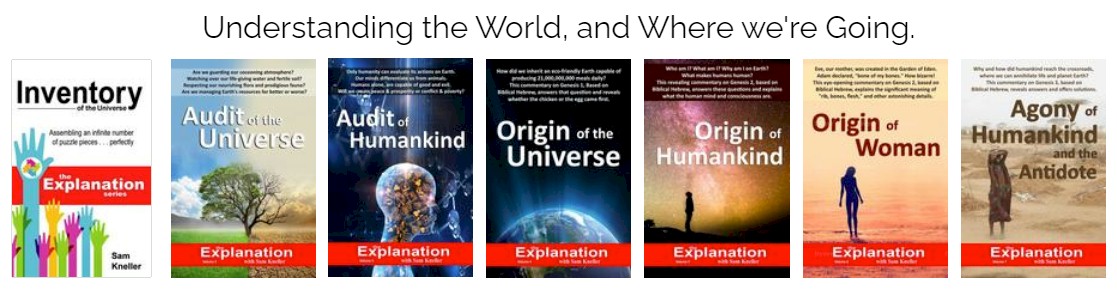
Since you read all the way to here… you liked it. Please use the Social Network links just below to share this information from The Explanation, Ghost in the Machine Debunked: The Baffling 20-Year Mystery of Human Growth


