

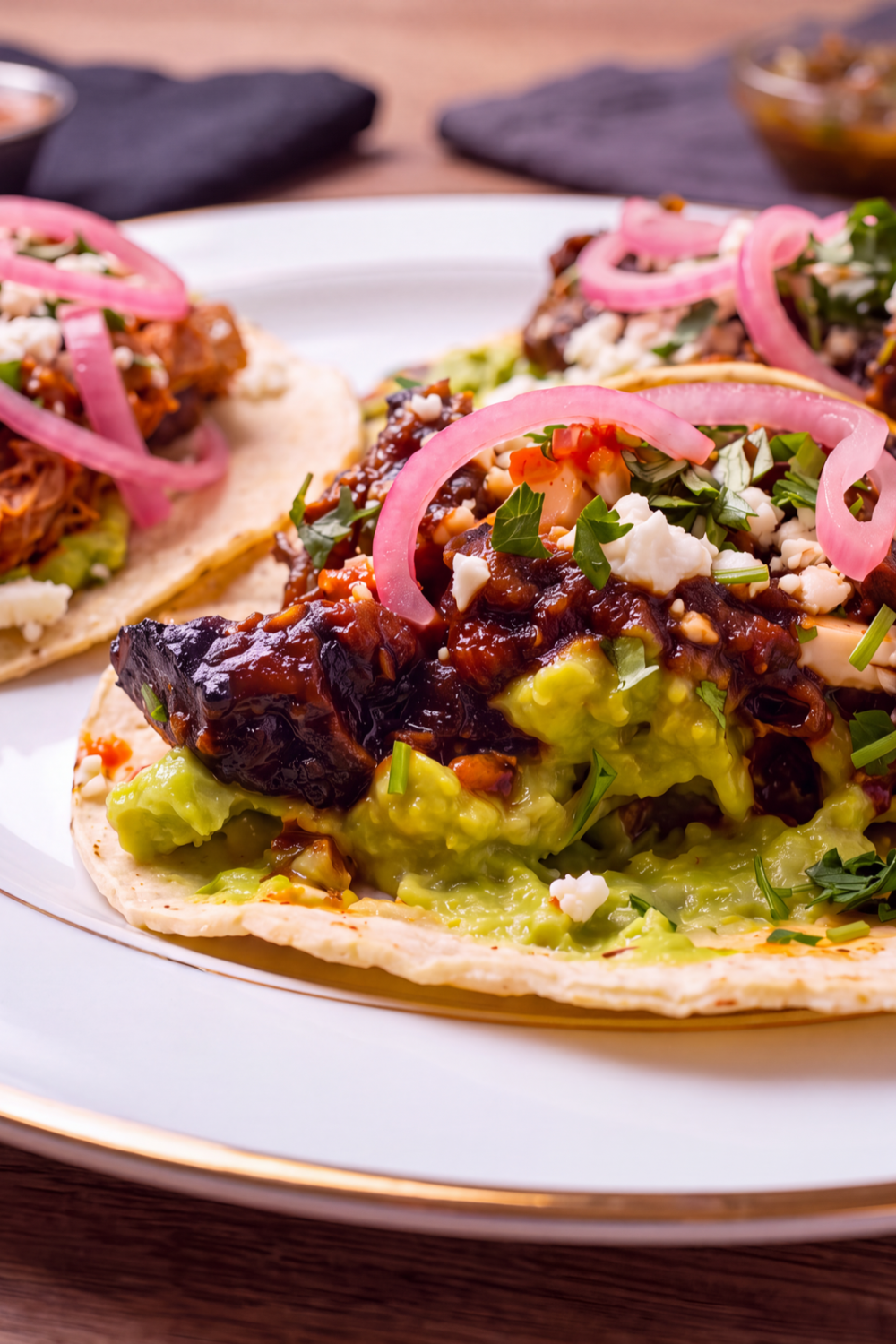
These slow cooker Korean pulled pork tacos are sweet, savory, and just a little spicy, with crispy edges from a quick trip under the broiler. A crunchy slaw on top balances out the sticky glaze, and they’ve become a regular at our place. They’re perfect for taco night, game day, or feeding a crowd at a backyard party.
No time to read the recipe? Pin it to read later ⤵️

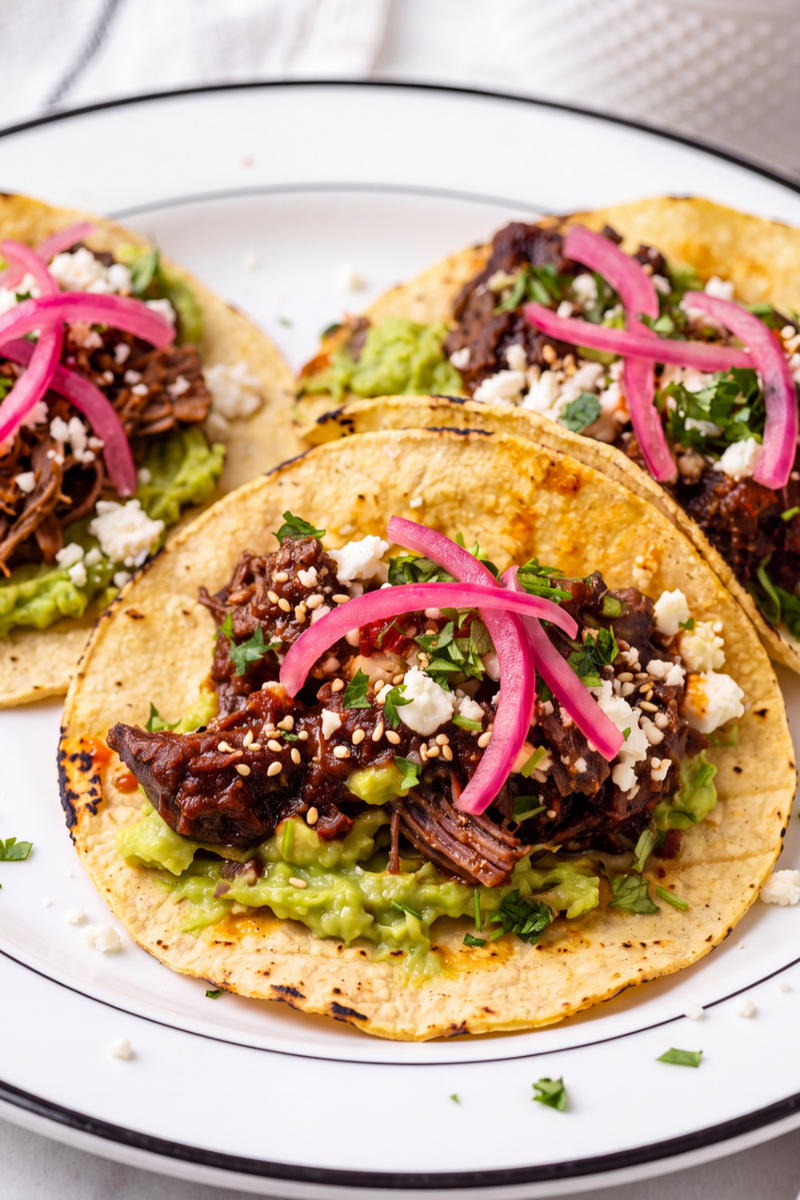
The pork cooks in soy, gochujang, garlic, and ginger until it falls apart, then gets tossed in a sticky glaze made from the cooking juices. You can make the pork and slaw a day or two ahead, so all that’s left on the night is to reheat, broil, and build.
What You’ll Need to Cook
Using leftover pulled pork? You can skip the pork butt, rub, and braising liquid entirely. Grab about 6 cups of cooked pulled pork and some low-sodium chicken stock, then head to my Using Leftover Pulled Pork section below for the 25-minute version.
Pork butt – Bone-in or boneless both work here. Look for good marbling; lean pork turns stringy in the slow cooker.
Gochujang – Fermented Korean chili paste. Look for a medium-heat tub at Asian grocers; it lasts months refrigerated.
Low-sodium soy sauce – The liquid gets reduced into the glaze, so regular soy ends up far too salty.
Corn tortillas – Small street-taco size. Warm them in a dry skillet or they crack when folded.
Feta – I tried cotija first, but feta’s saltier tang cuts the sweet glaze better. Now I won’t swap it.
The rest of the rub:
- Brown sugar
- Kosher salt
- Gochugaru
- Garlic powder
- Ground ginger
- Black pepper
- Neutral oil
For the braising liquid:
- Yellow onion
- Brown sugar
- Apple juice
- Rice vinegar
- Toasted sesame oil
- Garlic
- Fresh ginger
For the glaze:
For the pickled onions and toppings:
- Red onion
- Rice vinegar
- Sugar
- Kosher salt
- Guacamole
- Fresh cilantro
- Chives or green onions
- Sriracha
- Limes

Ingredient Substitutes
Sriracha and miso instead of gochujang: Mix 2 tbsp sriracha with 1 tbsp white miso and 1 tsp brown sugar for each 1/4 cup gochujang. I’ve used this when I ran out, and it gets you close on heat and savoriness, but you lose some of that deep fermented funk.
Tamari for gluten-free: Swap the soy sauce for tamari. Most gochujang contains wheat, so check the label or look for a certified gluten-free brand. I haven’t tested a gluten-free gochujang myself, but readers have told me the swap works with no change to the method.
Asian pear instead of apple juice: Grate half an Asian pear into the braise in place of the apple juice. It’s the traditional Korean way to sweeten and tenderize, and it gives the sauce a slightly fresher, fruitier sweetness.
How to Make Slow Cooker Korean Pulled Pork Tacos
Step 1: Season the Pork
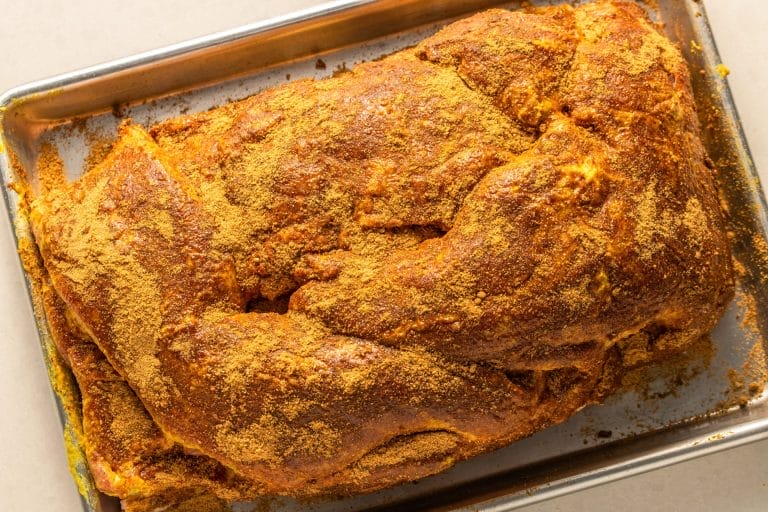
Pat the pork butt dry with paper towels and trim off any fat thicker than about 1/4 inch. It won’t render properly in the slow cooker and you’ll end up with greasy sauce. Cut the pork into 3–4 large chunks. More surface area means more sear and more rub, and it cooks more evenly than one big roast.
Mix the brown sugar, salt, gochugaru, garlic powder, ground ginger, and pepper, and press it onto every side of each chunk. Keep the salt light here, because the soy sauce and gochujang bring plenty.

Step 2: Sear for Flavor
Heat the oil in a large skillet over medium-high heat until it shimmers. Sear the pork for 2–3 minutes per side, without moving it, until each side has a deep brown crust. You should hear a strong, steady sizzle the second the meat hits the pan. If it’s quiet, the pan isn’t hot enough yet.
I’ve made this both ways, and the seared batch has a much deeper, roasted flavor that carries through to the glaze. The rub’s sugar caramelizes in the pan, and that’s flavor you can’t get from the slow cooker alone. If you’re short on time you can skip it, but it’s worth the 10 minutes.
Step 3: Build the Braise
Scatter the sliced onion over the bottom of the slow cooker and sit the seared pork on top. The onions lift the meat slightly and melt into the sauce. Whisk together the soy sauce, gochujang, brown sugar, apple juice, rice vinegar, sesame oil, garlic, and ginger, then pour it over the pork. Pour a splash into the hot skillet, scrape up the browned bits, and add that in too.
You’ll notice the liquid only comes partway up the pork. That’s on purpose. The first time I made this, I covered the pork completely and it came out gray and boiled with a watery sauce. The pork releases a lot of its own juice as it cooks, and that’s plenty.
Step 4: Slow Cook Until Tender
Cover and cook on LOW for 8–9 hours or HIGH for 5–6 hours. LOW gives you a more tender, juicier result, so I use it whenever I can. Try not to lift the lid, since every peek lets out heat and can add 20–30 minutes to the cook.
At around 2 hours, the pork will still be firm, the surface will have picked up color from the sauce, and the fat will just be starting to render. It’s not ready. It’s done when it pulls apart with two forks with almost no resistance, and a bone-in butt will slide its bone out clean. If you use a thermometer, you’re looking for about 203°F. By the end, the kitchen smells sweet and caramelized from the brown sugar and apple juice mixing with the pork fat.
Step 5: Make the Pickled Onions
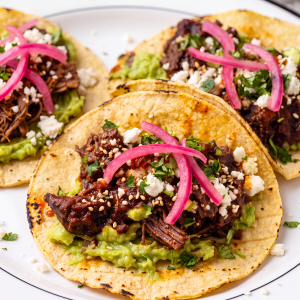
While the pork cooks, slice the red onion as thin as you can. Stir the rice vinegar, hot water, sugar, and salt together until dissolved, pour it over the onions in a jar, and refrigerate. After an hour, they turn that bright pink you see on top of the tacos, and they’ll keep for about two weeks.
Step 6: Reduce the Cooking Liquid Into a Glaze
Lift the pork onto a sheet pan and let it rest for 10 minutes. Strain the cooking liquid into a fat separator or jug, let it settle for a few minutes, and skim off the fat that rises to the top.
Pour 1 1/2 cups of the strained liquid into a saucepan with the gochujang, honey, and rice vinegar. Simmer over medium-high heat for 10–12 minutes, stirring often, until it’s thick and glossy and coats the back of a spoon. If it’s still thin and runny, give it a few more minutes. If it ever smells burnt, turn the heat down right away.
This is the other lesson I learned the hard way. On my first batch, all the gochujang went into the slow cooker, and nothing went in at the end. After 8 hours, the heat had faded, and the sauce tasted flat. Adding fresh gochujang to the glaze brings back that bright, spicy kick.
Step 7: Shred and Glaze
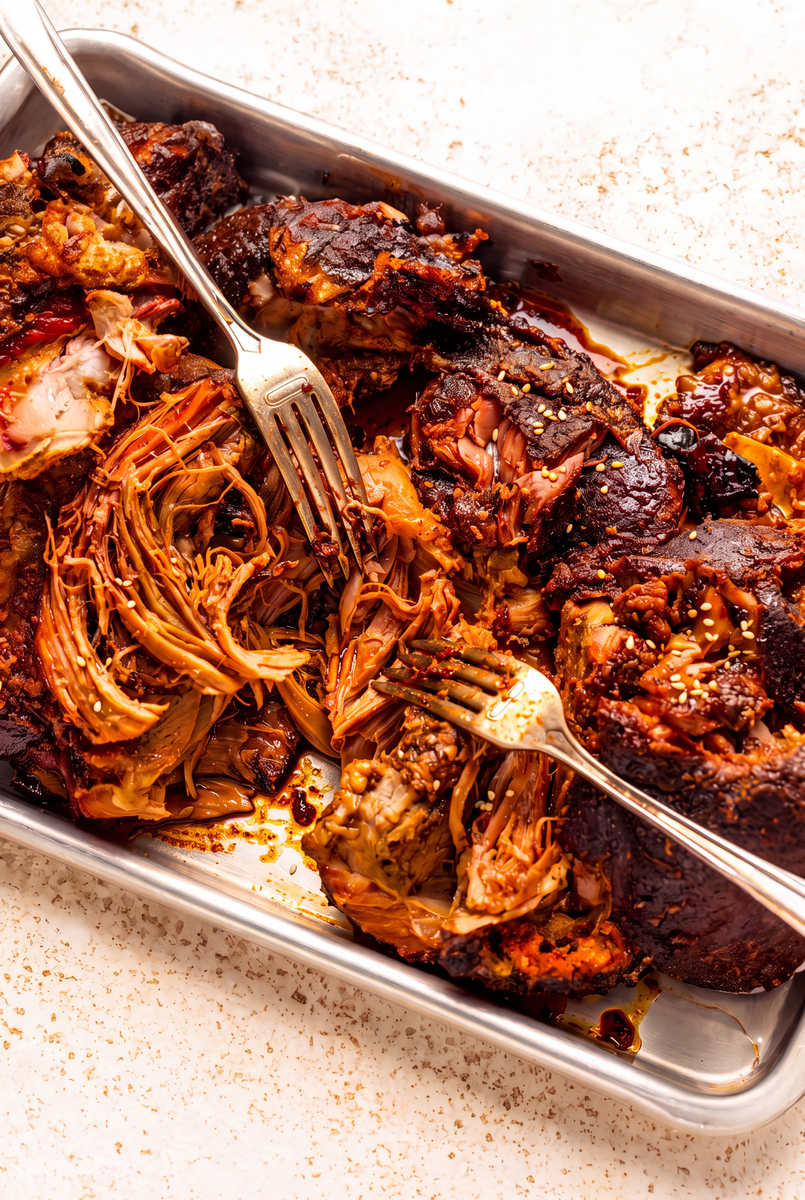
Shred the pork with two forks, meat claws, or gloved hands, and discard any large pieces of unrendered fat. Pour about two-thirds of the glaze over the pork and toss until every strand is coated. Taste it now. Gochujang brands vary a lot in heat and salt, so add a squeeze of lime or a little more honey to balance it.

Step 8: Broil for Crispy Edges
I borrowed this trick from my smoked pork carnitas. Spread the glazed pork in a single layer on a foil-lined sheet pan and slide it under the broiler on high for 3–4 minutes. Stay close. You want the tips to darken and caramelize and the glaze to bubble, but the sugar goes from caramelized to burnt fast.
Pull it out, brush with the remaining glaze, and toss. You get a mix of soft, juicy strands and sticky, crispy bits, and that contrast is what makes these tacos.
Step 9: Build the Tacos
Warm the tortillas in a dry skillet over medium-high heat for about 30 seconds a side, until they’re soft with a few charred spots. Stack them in a clean kitchen towel to keep warm.
Spread a spoonful of guacamole on each tortilla first. It acts as a barrier so the glaze doesn’t soak straight through. Then add the pork, crumbled feta, pickled onions, cilantro, chives, and a zigzag of sriracha. Serve with lime wedges.
Slow Cooker Times for Pork Butt
Always go by tenderness, not just the clock. Slow cookers vary a lot, and older models tend to run hotter.
| Pork butt weight | LOW | HIGH |
|---|---|---|
| 3 lbs | 7–8 hours | 4–5 hours |
| 4–5 lbs | 8–9 hours | 5–6 hours |
| 6–7 lbs | 10–12 hours | 6–7 hours |
Internal Temperature Guide
| Stage | Internal temp | What to look for |
|---|---|---|
| Safe, but not pullable | 145–190°F | Firm, slices rather than shreds |
| Ready to pull | 195–205°F | Shreds with two forks, almost no resistance |
| Reheating leftovers | 165°F | Steaming hot all the way through |
Common Mistakes (and How to Avoid Them)
Too much liquid. Drowning the pork boils it and gives you a watery sauce. Keep the liquid partway up the meat.
All the gochujang at the start. The heat and brightness fade over 8 hours. Save some for the glaze.
Glaze too salty. Reducing the cooking liquid concentrates the salt. Use low-sodium soy and taste before you add more.
Pulling too early. Pork that resists the forks needs more time, not less. Give it another hour on LOW and check again.
Skipping the broiler. Slow cooker pork on its own is soft all the way through. A few minutes under the broiler gives you the crispy edges.
Using Leftover Pulled Pork
Already have pulled pork in the fridge or freezer? This is my weeknight version, and honestly it’s one of the best things you can do with leftover pulled pork. You get the same sticky, crispy tacos on the table in about 25 minutes. Leftovers from my Smoked Pork Butt or Traeger pulled pork work perfectly too, and the smoke adds another layer of flavor.
How Much You’ll Need
Plan on about 6 cups (roughly 2.5 lbs) of cooked pulled pork for 24 tacos, or 1/4 cup per taco if you’re scaling up or down. Plain or dry-rubbed pork is best. If yours is already tossed in a sweet, tomato-based BBQ sauce, it still works, but cut the honey in the glaze in half or the tacos end up too sweet. I learned that one the hard way with a batch of leftovers from a Kansas City-style cook.
Reheat the Pork
If the pork is frozen, thaw it overnight in the fridge first. Add it to a large skillet with 1/2 cup low-sodium chicken stock, cover, and warm over medium heat for 5–7 minutes, stirring once or twice, until it’s steaming and reaches 165°F. If you’d rather keep it in the slow cooker, add the pork and stock and heat on LOW for about 2 hours, stirring halfway. Leftover pork dries out fast in the fridge, and the stock brings it back to that juicy, just-pulled texture.
Make the Glaze and Finish
Without the slow cooker juices, build the glaze from scratch. Simmer 1 cup low-sodium chicken stock, 1/4 cup gochujang, 1/4 cup low-sodium soy sauce, 3 tbsp honey, 1 tbsp rice vinegar, 1 tsp toasted sesame oil, 2 minced garlic cloves, and 1 tsp grated fresh ginger for 6–8 minutes until it coats the back of a spoon. Toss two-thirds of it through the warm pork.
Don’t skip the broiler here. Spread the pork on a foil-lined sheet pan and broil on high for 3–4 minutes until the edges darken and crisp, then brush with the rest of the glaze. Leftover pork crisps up faster than fresh because it has already lost some moisture, so keep a close eye on it. Build the tacos the same way: guacamole first, then pork, feta, pickled onions, cilantro, chives, and sriracha.
How To Store Leftovers and Reheat
Let the pork cool, then refrigerate it within 2 hours in an airtight container with a few spoonfuls of the cooking liquid or glaze. It keeps for up to 4 days in the fridge. To freeze, pack it in freezer bags, press out the air, and freeze for up to 3 months; thaw overnight in the fridge. Reheat in a skillet over medium heat with a splash of water for 5–7 minutes, or covered in a 300°F oven for 15–20 minutes, until it reaches 165°F. Store the toppings separately.
Want to Smoke It Instead?
If you’ve got a free day and a smoker, the same flavors work brilliantly on smoked pork. Follow my Smoked Pork Butt recipe with the rub from this card, using apple or cherry wood. Keep the gochujang off the meat until after it’s pulled, because the sugar burns over a long smoke. Then make the glaze from the stock version in the leftover section and finish under the broiler. For timing, see my guide on how long to smoke pork butt per pound.
📌 Did you try this recipe?
Have you made this delicious recipe and loved it?
I would love it if you took a minute to leave a star rating and review. It is also helpful if you made any substitutions or changes to the recipe to share that; thank you!
📌 Please also pin the image below, then you can find the recipe for the next time you want to cook.
What To Serve With Pulled Pork Tacos
More Pulled Pork Recipes

Slow Cooker Korean Pulled Pork Tacos
Sweet, sticky, a little spicy, and fall-apart tender. I sear the pork butt, let the slow cooker do the work in a gochujang-soy braise, then reduce the cooking juices into a glossy glaze and broil the pork until the edges crisp. Piled on corn tortillas with guac, feta, and pickled onions.
For the pork and rub:
- 1 pork butt bone-in or boneless, 4–5 lbs
- 2 tbsp brown sugar
- 2 tsp kosher salt
- 1 tbsp gochugaru Korean chili flakes
- 2 tsp garlic powder
- 1 tsp ground ginger
- 1 tsp black pepper
- 1 tbsp neutral oil for searing
For the braising liquid:
- 1 yellow onion thickly sliced
- 1/2 cup low-sodium soy sauce
- 1/4 cup gochujang
- 1/4 cup brown sugar
- 1/4 cup apple juice
- 2 tbsp rice vinegar
- 1 tbsp toasted sesame oil
- 6 cloves garlic minced
- 2 tbsp fresh ginger grated
For the gochujang glaze:
- 1 1/2 cups strained cooking liquid from the slow cooker
- 1/4 cup gochujang
- 2 tbsp honey
- 1 tbsp rice vinegar
For the quick pickled red onions:
- 1 large red onion thinly sliced
- 1/2 cup rice vinegar
- 1/2 cup hot water
- 1 tbsp sugar
- 1 tsp kosher salt
For the tacos:
- 24 small corn tortillas
- 2 cups guacamole
- 1 cup crumbled feta or queso fresco
- 1/2 cup fresh cilantro chopped
- 1/4 cup chives or green onions finely chopped
- Sriracha for drizzling
- 2 limes cut into wedges
-
Pat the pork dry, trim any thick fat, and cut into 3–4 large chunks. Mix the rub ingredients and coat the pork on all sides.
-
Heat the oil in a large skillet over medium-high heat. Sear the pork for 2–3 minutes per side until deep brown.
-
Scatter the sliced onion in the slow cooker and set the pork on top. Whisk the braising liquid ingredients together and pour over the pork.
-
Cover and cook on LOW for 8–9 hours or HIGH for 5–6 hours, until the pork pulls apart with two forks and reaches about 203°F.
-
While the pork cooks, make the pickled onions: stir the vinegar, hot water, sugar, and salt until dissolved, pour over the onions, and refrigerate at least 1 hour.
-
Lift the pork onto a sheet pan and rest for 10 minutes. Strain the cooking liquid and skim off the fat.
-
Simmer 1 1/2 cups of the strained liquid with the gochujang, honey, and rice vinegar over medium-high heat for 10–12 minutes until thick enough to coat the back of a spoon.
-
Shred the pork, discarding any bone and large fat pieces. Toss with two-thirds of the glaze.
-
Spread the pork on a foil-lined sheet pan and broil on high for 3–4 minutes until the edges darken and crisp. Brush with the remaining glaze.
-
Warm the tortillas in a dry skillet. Spread with guacamole, then top with pork, feta, pickled onions, cilantro, chives, and a drizzle of sriracha. Serve with lime wedges.
Smoke On!
Charlie

Author: Charlie Reeves
Hi, I’m Charlie, I have been meat-smoking and grilling for the past 15 years. I have an array of different smokers, thermometers, and have a love for finding the right wood and charcoal combo My favourite recipes are my EXTRA CRISPY smoked pork belly, juicy pulled pork, smoked brisket, duck poppers, and ANY SEAFOOD I grill).
I loves sharing his tips with beginners, helping them navigate the world of smoking. I find it’s not just about cooking; it’s a quest for that perfect smoky flavor.
You will usually find me playing with the kids, perfecting my brisket bark, or sipping beers with boys around the fire. Can’t wait to share all my delicious smoking and grilling recipes with you!
You can read more about me on our About Us page.
Hungry For More?


