Which Court Can Extend an Arbitrator’s Mandate Under Section 29A, and Whether Participating in Arbitration Waives a Three Member Tribunal Clause – Dr. Ananya Pratap Singh


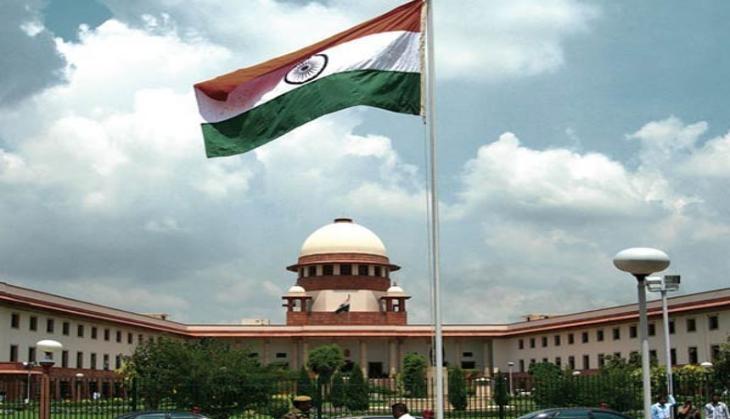
Supreme Court of India: Which Court Can Extend an Arbitrator’s Mandate Under Section 29A, and Whether Participating in Arbitration Waives a Three Member Tribunal Clause
In South Bihar Power Distribution Company Ltd v India Power Corporation Ltd & Anr, 2026 INSC 1165, the Supreme Court decided three questions. First, whether a party waives a contractual requirement of a three member tribunal by consenting to a sole arbitrator and participating before him. Second, whether a corporate debtor under insolvency can continue an arbitration to recover its dues. Third, which court can extend an arbitrator’s mandate under Section 29A of the Arbitration and Conciliation Act, 1996.
Section 29A sets the time limit for an arbitral award. The award must be made within twelve months from completion of pleadings. The parties can extend this by consent for up to six months. If no award is made in that time, the mandate of the arbitrator terminates unless a court extends the period. This is Section 29A(4). The extension can be sought by any party and is granted only for sufficient cause. The judgment records that while such an application is pending, the arbitrator’s mandate continues.
Factual Matrix
The appellant is a distribution licensee under the Electricity Act, 2003. It selected India Power Corporation Ltd, the first respondent, as distribution franchisee through competitive bidding. India Power Corporation (Bodhgaya) Ltd was incorporated as its 100 per cent subsidiary and special purpose vehicle.
A tripartite Distribution Franchisee Agreement was signed on 31.12.2013 between the appellant, the first respondent and the special purpose vehicle. The special purpose vehicle, the second respondent, was to perform the obligations. The first respondent was the confirming party.
Disputes arose. The first respondent issued an arbitration notice on 09.11.2016 under Article 17 of the agreement. No arbitrator was appointed. The second respondent approached the High Court at Patna under Section 11 in Request Case No. 77 of 2018. With the consent of the parties, the High Court appointed Justice Shashank Kumar Singh as sole arbitrator on 04.04.2018.
Arbitration began on 12.04.2018. The appellant’s application under Section 13 read with Section 16(1) was rejected by the arbitrator on 12.05.2018 as not pressed. The appellant filed a counter claim on 02.02.2019 and a supplementary counter claim on 28.03.2019. The arbitrator could not continue after the stage of recording evidence.
Meanwhile, the National Company Law Tribunal, Kolkata admitted an insolvency application against the second respondent on 08.11.2019 and appointed an interim resolution professional. A public announcement was made on 28.05.2020. The appellant did not file its claim before the interim resolution professional.
The respondents approached the High Court again in Request Case No. 14 of 2020. With the consent of the parties, the High Court appointed Justice Dipak Misra, a former Chief Justice of India, as the new arbitrator on 10.03.2021. A procedural order dated 07.04.2021 recorded that the parties had no objection to the composition of the tribunal or to the sole arbitrator arbitrating the dispute.
The proceedings were not completed in one year. Time was extended by six months on the consent of the parties. That period was to expire on 07.08.2021. The respondents then filed Request Case No. 36 of 2021 before the High Court seeking a four month extension. The appellant resisted. It argued that the High Court had no jurisdiction to extend time. It also challenged the sole arbitrator, since the agreement provided for three arbitrators. It filed Request Case No. 78 of 2022 for appointment of a three member tribunal.
The creditors of the second respondent approved the resolution plan of Rankini Power Generation Private Limited on 13.02.2021. The National Company Law Tribunal approved it on 18.07.2022. The name of the second respondent was changed to Vikriti Power Limited from 28.08.2023.
By judgment dated 15.09.2023, the High Court held that there was consent to the sole arbitrator, which waived the three member condition. It held the appellant’s conduct amounted to acquiescence. It rejected the objection that the second respondent had no locus to initiate arbitration. It held that the High Court itself had jurisdiction under Section 29A and extended the mandate by four months. Request Case No. 36 of 2021 was allowed and Request Case No. 78 of 2022 was rejected.
On 12.02.2024, the Supreme Court permitted the arbitration to continue but directed that no award be declared. During the pendency of the appeal, the respondents applied under Section 29A(5) before the Principal District Judge cum Commercial Court, Patna in Arbitration Case No. 54 of 2024.
On 21.01.2026, the Supreme Court directed the District Court to decide that application on its own merits within two months from 24.01.2026. By order dated 23.03.2026, the District Court extended the mandate of the sole arbitrator by six months from the date of that order.
Parties’ Contentions
For the appellant, Mr Sundaram referred to Clauses 17.2.5 and 17.2.6 of the agreement. He submitted that any dispute could only be decided by a tribunal of three arbitrators. He submitted that the first respondent is only a proforma party. The contesting parties are the appellant and the second respondent. So the first respondent’s consent is not material.
He submitted that the second respondent has ceased to exist and there cannot be arbitration for the claim of a non existent party. He submitted that no claim was ever raised by the first respondent. He submitted that the High Court had foisted a solitary arbitrator on the appellant and taken away the forum contracted for. He sought relegation to a new three member tribunal. Mr Raju Ramachandran, for the appellant in the connected appeal, supported these submissions.
For the second respondent, Mr Atmaram Nadkarni supported the High Court’s judgment. He submitted that sufficient progress had been made by the arbitrator within the extended period. If the arbitration were aborted now, serious prejudice would be caused to the respondents.
Clause Considered
Clause 17.2.5 of the agreement provides that disputes which cannot be resolved by negotiation and the dispute resolution procedure shall be exclusively submitted to arbitration at the request of either party. The proceedings are to be conducted under the 1996 Act by a panel consisting of three arbitrators. The Court noted that clauses 17.2.1 to 17.2.4 provide for notice, a permanent dispute resolution body and a high powered body before arbitration.
Issues
The High Court framed three questions. The Supreme Court examined them one by one.
First, whether there was proper consent by the appellant so as to constitute waiver of the condition for a three member tribunal. If not, whether acquiescence could be presumed since the appellant participated for about 18 months before raising the objection.
Second, whether the second respondent, the special purpose vehicle, was competent to request arbitration. This included whether the insolvency proceedings against it disabled it from continuing with the request for extension.
Third, whether the Chief Justice of the High Court or his designate, empowered under Section 11, can grant an extension of time under Section 29A. The alternative was that only the principal civil court of original jurisdiction in the district, or a High Court with original civil jurisdiction, could do so.
Findings of the Supreme Court
First question: waiver and acquiescence
The Court noted that the High Court’s earlier orders appointing the two arbitrators were never assailed by the appellant. Those orders attained finality and bind the parties.
The Court referred to Section 4 of the Act. It provides that a party who knows that a requirement under the arbitration agreement has not been complied with, and yet proceeds with the arbitration without objecting without undue delay, is deemed to have waived the right to object.
The Court also referred to Section 16(2). It provides that a plea that the tribunal lacks jurisdiction must be raised not later than the submission of the statement of defence. A party is not precluded from raising it merely because it appointed or participated in appointing an arbitrator.
The Court held that the appellant had clearly waived its right to object to the composition of the tribunal within the statutory time. It continued to participate before the sole arbitrator. It consented to the extended period. It filed a counter claim and a supplementary counter claim. This amounted to acquiescence. It was not open to the appellant to question the sole arbitrator at the belated stage when the respondents sought further extension under Section 29A(4).
The Court relied on Union of India v Pam Development Private Limited, (2014) 11 SCC 366. In that case, a sole arbitrator was appointed by the Calcutta High Court under Section 11(6). The appellant participated, lost, and challenged the award under Sections 34 and 37.
It then argued that the contract required a three member panel. This Court held that the appointment order was not challenged and had become final. It held that since the appellant participated, it was deemed to have waived the requirement under Section 4 read with Section 16. The Court applied the same reasoning here and affirmed the High Court on the first question.
Second question: locus of the special purpose vehicle under insolvency
The High Court had held that both respondents are separate legal entities and parties to the tripartite agreement. It held that Section 14 of the Insolvency and Bankruptcy Code does not necessarily prohibit the corporate debtor from pursuing recovery of its dues. It noted that the resolution professional authorised the signatories to appear before the tribunal.
This was approved by the committee of creditors in compliance with Section 28(1)(h) of the Code. It noted that responsibility for implementing the agreement fell on the second respondent, which was a special purpose vehicle formed for that purpose. It held that the obligation of the first respondent was an issue framed by the arbitrator.
The Supreme Court agreed. It held that the moratorium under Section 14 is intended to prohibit debt recovery action against the corporate debtor so as not to adversely impact the insolvency process. It does not impair a claim by the corporate debtor, such as an arbitral claim. Such a claim, if successful, would only bolster the financial health and enhance the value of the corporate debtor.
The Court also noted that the resolution professional had authorised the signatories and the committee of creditors approved it. The Court held that the committee is the best authority to assess the financial position of the corporate debtor. It concurred with the High Court on the second question.
Third question: which court can extend time under Section 29A
The Court first explained Section 2(1)(e)(i). It defines the “court” for domestic arbitration as the principal civil court of original jurisdiction in a district. It includes the High Court in the exercise of its ordinary original civil jurisdiction. It excludes civil courts of an inferior grade and courts of small causes.
The Court held that this definition permeates Part I of the Act. References to the Supreme Court or the High Court in Section 11(3A), (4) and (6) do not impact it. Those provisions only deal with appointment of an arbitral tribunal when parties fail to appoint. Nothing more should be read into them. So the Supreme Court or the High Court referred to in Section 11 cannot be deemed the “court” as defined in Section 2(1)(e).
The Court then referred to Section 42. It begins with a non obstante clause. Where an application under Part I has been made in a court with respect to an arbitration agreement, that court alone has jurisdiction over the arbitral proceedings and all subsequent applications. The Court posed the question whether the “court” in Section 42 is the “court” defined in Section 2(1)(e).
The Court relied on a series of decisions.
In State of West Bengal v Associated Contractors, (2015) 1 SCC 32, a three Judge Bench considered which court decides a Section 34 application. It held that Section 2(1)(e) is an exhaustive definition. Section 11 applications are not moved before the defined “court” but before the Chief Justice of the High Court or the Supreme Court, or their delegates.
So Section 42 does not apply to them. Section 9 and Section 34 applications are within Section 42. The Supreme Court can in no circumstances be the “court” under Section 2(1)(e). An application made to a court which is not the defined court, or which has no subject matter jurisdiction, falls outside Section 42.
In Chief Engineer (NH) PWD (Roads) v M/s BSC and C and C JV, SLP(C) No. 10544 of 2024, decided on 13.05.2024, a two Judge Bench held that the power under Section 29A(4) vests in the court as defined in Section 2(1)(e). That court was held to include the High Court only if it has ordinary original civil jurisdiction. In that case the High Court did not have it. The power of substitution under Section 29A(6) is only consequential. It must be exercised by the court which can extend time under Section 29A(4).
In Jagdeep Chowgule v Sheela Chowgule, (2026) 5 SCC 667, the question was whether an application to extend time under Section 29A can be filed before the High Court or the civil court when the tribunal was appointed by the High Court or by the parties. The Court held that Section 11 has no bearing on Chapters V and VI, where Section 29A sits.
It held that the power under Section 29A(4) vests in the Section 2(1)(e) court. It held that jurisdiction under Section 11 stands exhausted upon constitution of the tribunal. No residual supervisory power is left with the High Court or Supreme Court. Solely because a superior court appoints the arbitrator, it cannot be regarded as a court of first instance for Section 42. The High Court’s extension order was set aside, with liberty to move the commercial court.
In C. Velusamy v K. Indhera, (2026) 5 SCC 340, the Court endorsed Jagdeep Chowgule. It held that the Section 29A court is the civil court of ordinary original jurisdiction in a district, including the High Court in its original civil jurisdiction under Section 2(1)(e). It shall not be the High Court or the Supreme Court under Section 11(6). Section 42 will also not apply to Section 11. The Court also explained that “court” in other provisions of the Act is guided by Section 2(1)(e).
The Court also referred to Rohan Builders (India) Pvt Ltd v Berger Paints (India) Ltd, (2025) 10 SCC 802. That case held that an application for extension under Section 29A(4) read with Section 29A(5) is maintainable even after the expiry of the twelve month or extended six month period. The Court cautioned against a narrow reading of Section 29A(4).
It noted that a narrow reading would relegate a faultless party to a fresh reference. C. Velusamy held that there is no automatic extension. The court must exercise discretion after close scrutiny. It listed the powers under Section 29A. These include extending time before or after expiry, reducing arbitrators’ fees for delay attributable to them, imposing terms, substituting arbitrators, and imposing costs.
On this basis, the Court held that the High Court’s view on the third question was clearly unsustainable in law. The Chief Justice of the High Court or his designate under Section 11 cannot grant an extension under Section 29A(4). The conclusion that this jurisdiction lies with the High Court was set aside.
The Court held that this had no bearing on the outcome. By the Supreme Court’s order of 21.01.2026, the District Court had already considered the extension application. The Principal District Judge cum Commercial Court, Patna had extended the mandate by six months by order dated 23.03.2026.
Conclusion
The Court upheld the High Court’s judgment of 15.09.2023 on the first and second questions. It set aside the decision on the third question. The embargo imposed by the order of 12.02.2024 stands lifted. The arbitrator shall conclude the proceedings by passing the award within six weeks from the date of the judgment. The civil appeals were dismissed.