Interview: Director Sam Freedman on his short film Cameron, queer identity and the importance of softness; “Our authenticity is actually our greatest strength.”


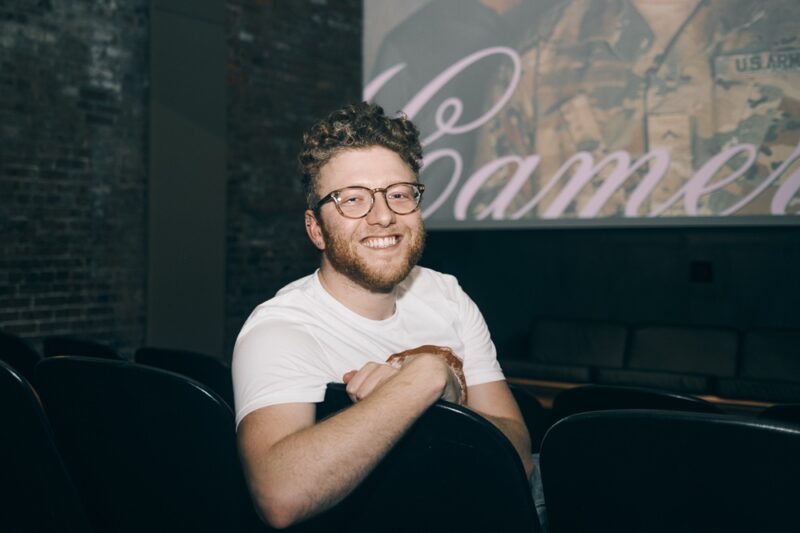
In a world that so often encourages young men to mistake emotional vulnerability for weakness, what happens when the very qualities that make someone extraordinary are the ones they’re taught to suppress? With his devastatingly effective short film Cameron, writer/director Sam Freedman transforms that question into a deeply human nightmare, using the language of horror to explore the destructive potential of well-intentioned love, inherited ideals of masculinity, and the emotional cost of abandoning one’s authentic self.
When retired Marine Declan (Patrick Fabian) and his wife Aisha (Tracie Thoms) receive news that their 20-year-old son, Cameron (Aaron Woodward), has been killed in action, their grief is compounded by the resentment surrounding his decision to enlist. But when Cameron inexplicably returns home, physically formidable yet almost entirely stripped of the warmth and vitality that once defined him, his parents are forced to confront the horrifying possibility that getting their son back doesn’t necessarily mean they’ve recovered the person they lost.
As confronting as its imagery can be, Cameron is an extraordinarily tender piece of filmmaking. In refusing to equate queerness with fragility, Freedman challenges the notion that survival should come at the expense of individuality. It’s an important distinction, particularly for young queer people who are still navigating the expectations placed upon them by their families and the wider world. The film’s greatest tragedy isn’t that Cameron was ill-equipped to face that world, but that he was convinced he needed to become somebody else in order to survive it.
In a particularly personal and reflective conversation with our Peter Gray, Freedman discussed the film as both a ghost story and a love letter to queer boys, the importance of extending empathy without excusing destructive behaviour, their shared experiences of coming out, and why the softness we’re so often encouraged to surrender may be the very thing most deserving of our protection.
I was quite taken with where this film went and the subject matter. One of the things that I found really quite heartbreaking is Declan’s desire to toughen his son up. It arguably comes from a place of love, but it’s also the very thing that destroys him. I’m curious whether you see the film as being about the dangers of masculinity, or more specifically the damage that we can do when we allow our fears for someone to dictate who we think they should become?
Yeah, definitely a little bit of both, but more so the latter for me. It was a story that I really wanted to see told in this way, so that was a big animating impulse for me. I often refer to Sarah Connor when I talk about what this movie is almost railing against, and I mean no offence because she’s an iconic character and we love her. But I do think that classic narrative of the way to survive in a tough, scary world being to become physically stronger, more masculine, more Terminator-like, can be useful in some cases. In other cases, like Cameron’s, it’s kind of the opposite of what a person needs.
Sometimes I think our authenticity is actually our greatest strength, and being told to be something you’re not can destroy you. I think that’s very much what happens here. And absolutely, it’s what you said. The tragedy is that Aisha, Tracie Thoms’ character, is not the only parent here who wants the best for their child. It’s just that her impulse is arguably a lot less destructive than his ultimately is.
In your director’s statement you describe the film as a plea for softness, which is such a beautiful statement for a film that becomes so brutal. Was that contrast always central to the story – this idea that the very qualities we should be protecting in young men are often the things that are encouraged to be stripped away?
Yeah, exactly. It’s that cautionary tale of wanting to see soft men lean into their masculinity so that they don’t get attacked for being soft, because we don’t tend to reward that. But when you force them into a box that they clearly don’t belong in, and that doesn’t come naturally to them, it’s typically not great things that result. And certainly, without giving anything away, it’s not a great result here. But to your point, it’s absolutely about how dangerous it is to not obey the natural laws of a given person, and to push them into a place that they don’t actually exist in.
I won’t give anything away, but the final embrace feels like this very profound reversal of everything Declan has taught his son. He’s spent his life equating strength with physical power, and then this meaningful act becomes really tender. Did you always know where the story was going to end? And do you see that moment as an act of redemption, or is it the tragedy of someone understanding love when it’s too late?
I absolutely think it’s both, and I think anybody who watches this will probably perceive that, in some way, it’s a ghost story. Whether it’s a literal or figurative ghost story is up to interpretation, and I certainly wanted it to be. But what’s unquestionable is that Cameron comes back seeking some kind of redemption. He comes back looking for closure, which is so often what ghost stories entail. Whether he is truly dead or not, something in him is, and so it’s inherently too late to find total redemption in any of this. But it’s still an opportunity for certain wrongs to be righted and for some kind of closure to be found. And I think that’s what the ending is playing at a little bit.
Well, looking at that, Cameron returns physically stronger than he’s ever been, and he’s seemingly incapable of feeling pain. Yet there’s obviously something devastating about how much of his humanity has disappeared. Were you consciously interested in the irony of creating a young man who has become everything his father needed him to be, but then that transformation makes him unrecognisable?
Absolutely, yeah. And I think that’s what’s so devastating to Tracie Thoms’ character, Aisha, is that she’s like, “Where’s my son?” And again, that’s the ghost story element. Whether he’s back in true corporeal form or not, he’s just not him. We see these quick little glimpses of who he used to be, and I think what we see are glimpses of a fully formed person. Someone who smiles, someone who finds joy in the life that he’s been given and in who he is.
Unfortunately, in an attempt to – I won’t even say impress his father, but more to validate what his father wants for him – he makes a choice that deprives him of all of that and transforms him into something that he was never really meant to be. As a result, Declan, Patrick’s character, gets what he wants in theory, but it’s like a monkey’s paw question of, “Do you really want that? Is that really what you want?”
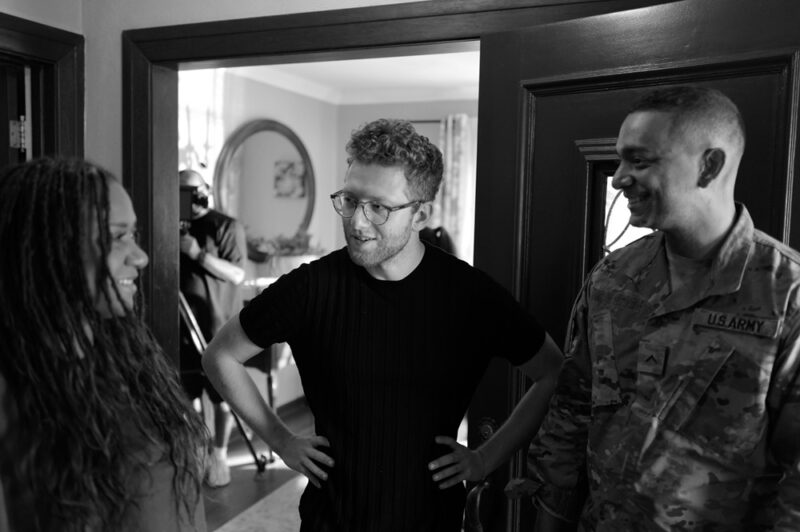
I’m very thankful that me coming was accepted. There were no issues with it. But then watching these glimpses of Cameron’s past, and it feels like maybe there were some things he couldn’t explore, and it made me think of the outside influences and how Cameron probably grew up in a household under Declan’s eye. And horror as a genre, which this flirts with, has this extraordinary ability to make emotional damage physically visible. In this, the violence feels almost like an external manifestation of everything the family aren’t able to articulate. Was horror always the language you wanted to use for this story? Or did that genre emerge as you were exploring the dynamics?
100%. It was always going to be, in some way, a horror movie. It’s interesting because horror is very in right now, which I love because I’m a horror person. But in my mind, this movie is horror, but it’s also a lot of other things. When we played HollyShorts, it was classified as a thriller, which I think is accurate. Horror is almost more of a vehicle for revelation in it. At times, it’s just a real drama. Sometimes there’s dark comedy, suspense, mystery, and then, as you pointed out, there are these moments of straight-up horror.
What excited me about that was using horror as a vessel to make the most extreme moments in the film feel that much more shocking and terrifying, because you’re not necessarily sitting in that feeling the entire movie. When you suddenly get there, our main characters are just unprepared. They didn’t know where it was going.
I’ve always really loved genre blends. I like being slippery about it because it keeps you on your toes, and it allows you to use your favourite parts of all these different types of movies that influence you and blend them all into one.
There’s the horror of the familiar here, because what is unsettling is that in Cameron’s return, his parents want to desperately recognise him – even as everything about him suggests he’s no longer that person. How did you approach that tension between familiarity and estrangement, particularly in Aaron’s performance, where so much seems to depend on what Cameron doesn’t say?
Yeah, 100%. I think it really comes down to the way that his parents react to him. Except for some spare glimpses of who he used to be in these little flashback moments, you don’t really know him. You can only discern who he was and what’s changed about him through the way that his parents receive him. And I think they both receive him with a lot of bafflement, but in very different ways.
His dad is more baffled by the mere fact that he’s there, and then, of course, that turns into more of an anxiety and almost an indignation about the fact that this is all happening. How does this reflect on the family and their honour? Aisha doesn’t care about that at all. She’s just glad her son is home, but she’s beginning to realise that she might have gotten him back against all odds, but not really. And there’s the grief of realising that, which then becomes, “Okay, all I can do now is try to protect him now that I have him again. What does that entail? Maybe I even need to protect him from his own father because I couldn’t do that the first time.” And here we are.
I think it’s all about the way that they take him in, and I think that was also the challenge for Aaron, which I think he met beautifully. How do you simultaneously reflect this hardened shell of a person, but also give us these glimpses of the softer, sweeter human he used to be? How do you capture that all at once? It’s an extraordinarily challenging role, but I’m so thrilled with what he was able to do with it.
As you said, there’s a lot of enormous ideas here. Grief, masculinity, queer identity, institutional violence. All in the confines of 28 minutes. How did you determine what needed to remain unspoken? And did you find withholding certain explanations actually made the emotional experience more powerful?
Totally. It’s interesting because I always wanted this to be about half an hour long, and then when we shot it and I did our little assembly cut, where I withheld nothing, it was 42 minutes. I was like, “Well, what am I going to do with that? That’s a drama pilot, and it’s not actually a pilot, so we can’t have that.” I knew I had to cut it down, but the question was, what goes?
I found that most of what I ended up removing were these privileged moments with just Cameron. There was definitely a little more of that originally, and I found that it became a bit of a less-is-more thing. It’s almost like the more we see of him, the less sense he makes, because we’re learning so much about him through his parents and not so much through him.
In my mind, with that ghost story element, I originally wanted to have a little more of him exploring his home, his childhood bedroom, and the unfamiliarity of that, not recognising the person he used to be. We do get a little bit of that, but I found that we didn’t need a lot of it. What I discovered was more useful for the story was being really smart and picky about when we’re alone with Cameron and when we actually see him.
I know you’ve described this story as a love letter to queer boys, which is such a tender way to frame a film with such a confronting premise. I’m curious, what were you hoping to say to those boys through this story? And whether there’s something you wish you’d heard about strength and vulnerability when you were younger?
Yeah, 100%. I’m like you in the sense that my family was really great about my coming out process, and my coming out process was a very long one. I don’t even know if I had a specific moment where I came out. It just became increasingly impossible to deny that that’s what was happening. But it took a while and had a lot of permutations.
Sometimes I’ll look back and go, “That was just so unnecessary.” I mean, it is what it is. You can’t change these things. They are what they need to be. But sometimes I look back and think, “Did I really need to worry so much?” And the answer was no. Ultimately, I’m very lucky that I didn’t need to worry more.
So I hope that, in watching this film, there are other people who are either recently on the other side of that or maybe still in the midst of it, who can see that Cameron’s great strength, or what his great strength was, was his authenticity and his ability to just be himself. The tragedy of this story is having that taken away from him. That’s what we don’t want, and that’s what we should fear. And I hope that’s a useful thing for some people to hear and to see.
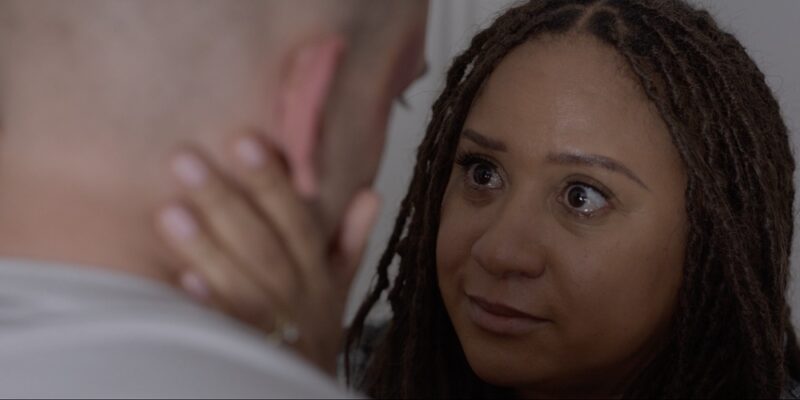
I feel like we’re living in a time now where kids are far more comfortable coming out as queer at a much younger age. I look back and think, “You could have come out when you were like 14, and no one would have given a shit.” Imagine what could have been.
The life I could have lived, right?
Yeah, and there was never a “moment,” it just happened. And everyone is like, “Yeah, of course.”
(Laughs) We’re the last to know.
And one of the more challenging things about the film is that Declan’s actions have consequences, obviously, but you never reduce him to a villain in any way. As a storyteller, do you think there’s a particular responsibility to extend empathy to people whose understanding of love has caused genuine harm?
100%. And I would even go as far as to say that there are people who don’t extend much empathy at all who still deserve, if nothing else, to have their stories told. I think we’re all products of our formative experiences, and so much is passed on. When you look at Declan, on so many levels, it makes sense that he would have the reaction that he does to Cameron being who he is.
For one thing, he’s a straight man parenting a queer child, so he doesn’t know how to look after him in that respect. He’s also a white man parenting a child of colour and doesn’t really know how to look after him in that respect, or how to ensure that he’s safe from the harm that he perceives may befall his son, who he loves. But there are multiple levels on which he just can’t relate to the life his son is going to have. And then, having a military background, I think collectively, Declan makes sense. I think it’s clear where this all comes from, and I hope it’s clear that he loves his son in his own way.
But as Aisha also points out, who or what do you love more? Your son, or what he brings to this family and how he reflects on this family and its honour? I think that’s a core conflict within him.
Looking at the film’s emotional legacy, because when you think about Cameron before his enlistment, you get that there was this joyful gay man who was comfortable in his skin. Do you see the film as mourning the person he became, or celebrating the person he was allowed to be before the world convinced him he needed to change?
Yeah, I think it’s celebrating the fact that at one point in time, particularly when historically so many kids were encouraged not to be themselves, he was able to be himself. And I do think that’s really where Aisha comes in. Tracie has a really significant monologue at a certain point in the film that speaks to this.
I think what’s sad is that because she was able to take the reins on parenting him, that allowed him to be the child that he actually was. But once she has to release him into the adult world and he gets to make his own choices, he makes the choice she hoped he wasn’t going to make, but that, of course, his father is pushing him to make.
It’s almost like, in a way, he chooses his father over her, which for her is like, “Why? I’m the one who’s been so loving to you. I’m the one who has embraced you as you are, not your father.” I think that’s the subtext of all of that.
So, yeah, I think it does celebrate the fact that he was ever able to be himself, but it also mourns the fact that he chose to leave that behind, because ultimately it was his choice, you know?
Knowing what you achieved in such a short amount of time has me looking forward to what a feature length from you looks like, and if this isn’t horror, I’m excited to see what horror from you is because that particular effect was glorious to look at as someone who loves practical horror. Congratulations again. I’m really looking forward to people discovering this and hopefully generating some insightful conversations.
Thank you, Peter. I really appreciate it. I do want to say, this (interview) was my favourite of these that I have done. This was great.
Cameron is now available to purchase on Apple TV.