


A swallow perches on a white plastic garden chair beside a column of blue folder icons, apparently waiting for a download to finish. A pale sky lifted from a computer desktop frames a bird circled in red under the instruction “Enter the following”, and the answer typed in the box below reads “birds :-)”. In her artworks, Gigi Borgese draws every detail by hand, and the gentle humour really rises to the surface once you know where it all comes from.
Growing up in San Jose, California, Gigi describes herself as largely self-taught, having spent much of her life as what she calls “a passive creative”. Between the ages of 14 and 17, she was an influencer on early TikTok, where the objectification she endured and “the feelings of emptiness/futility in that content” pushed her to delete her accounts and commit to art.
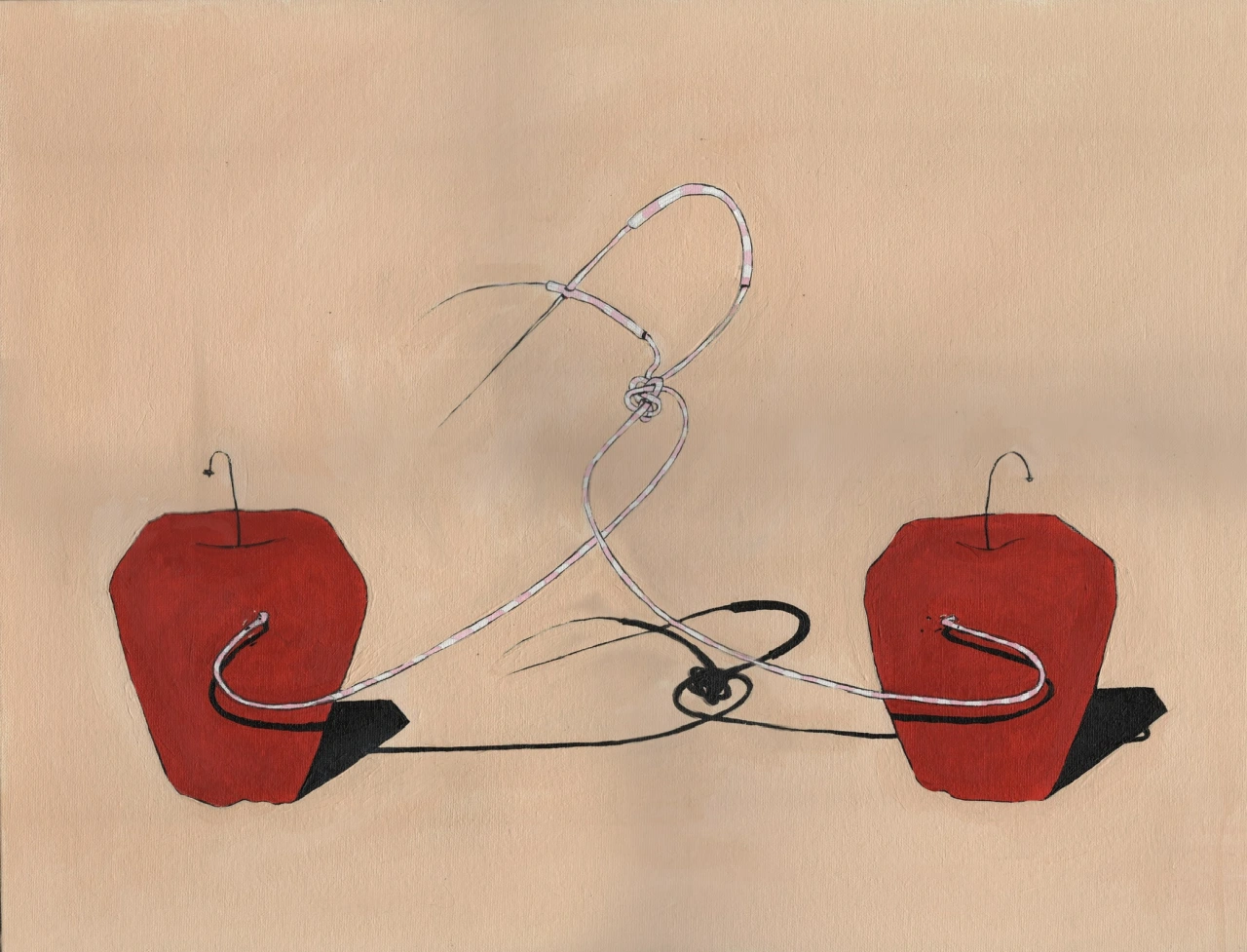
Brother in Arms, 2025
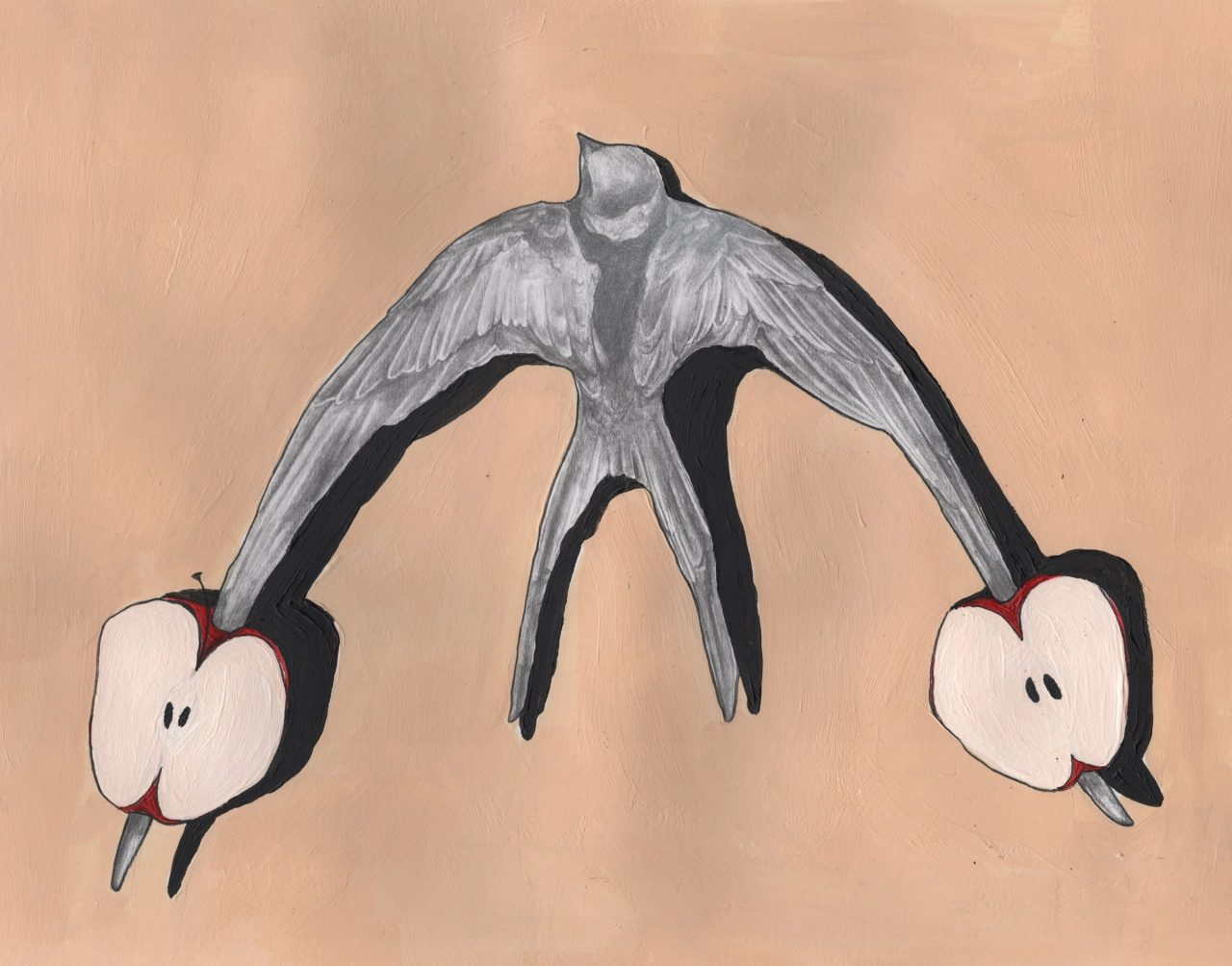
Swallow II, 2025
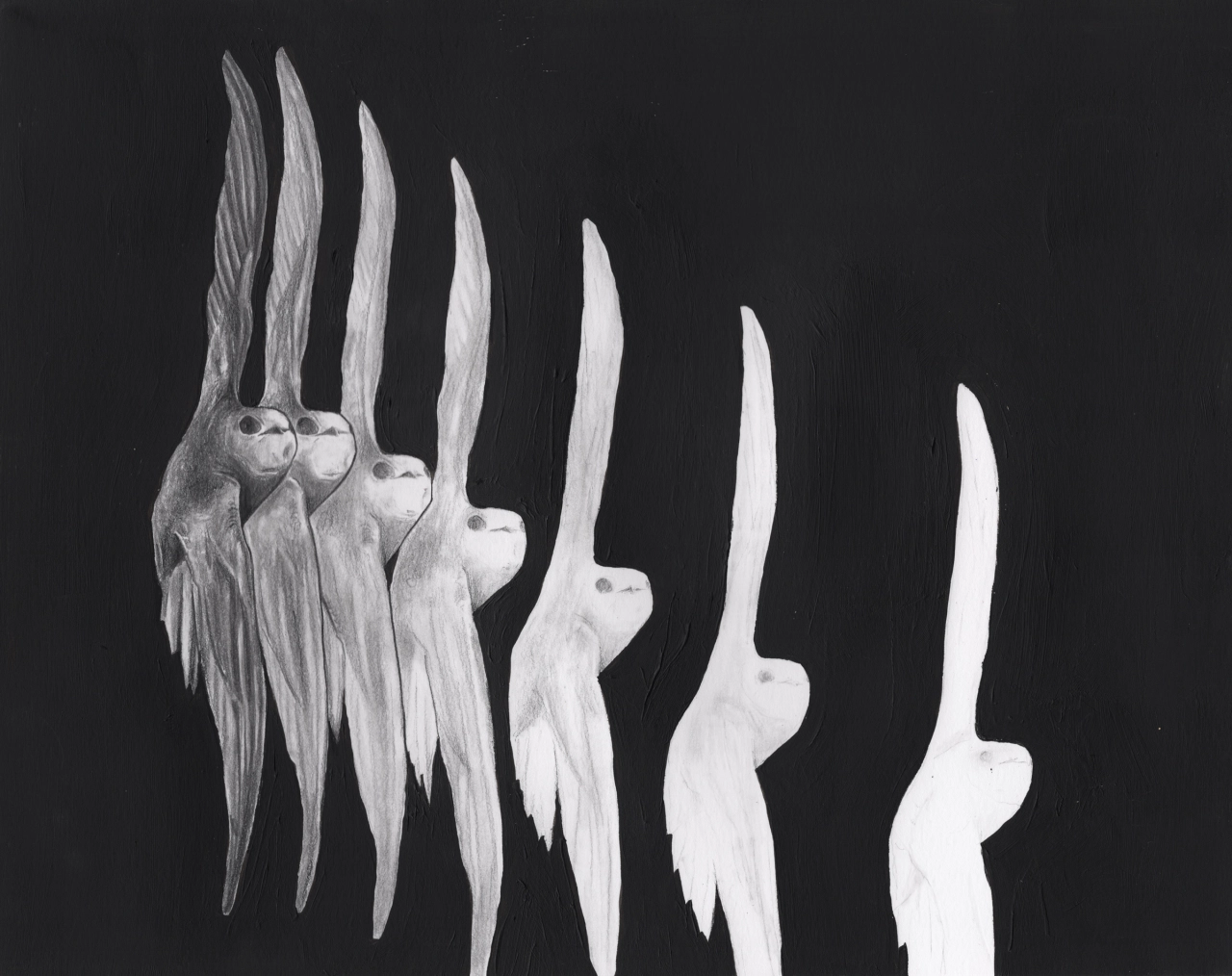
Typical Malaise, 2025
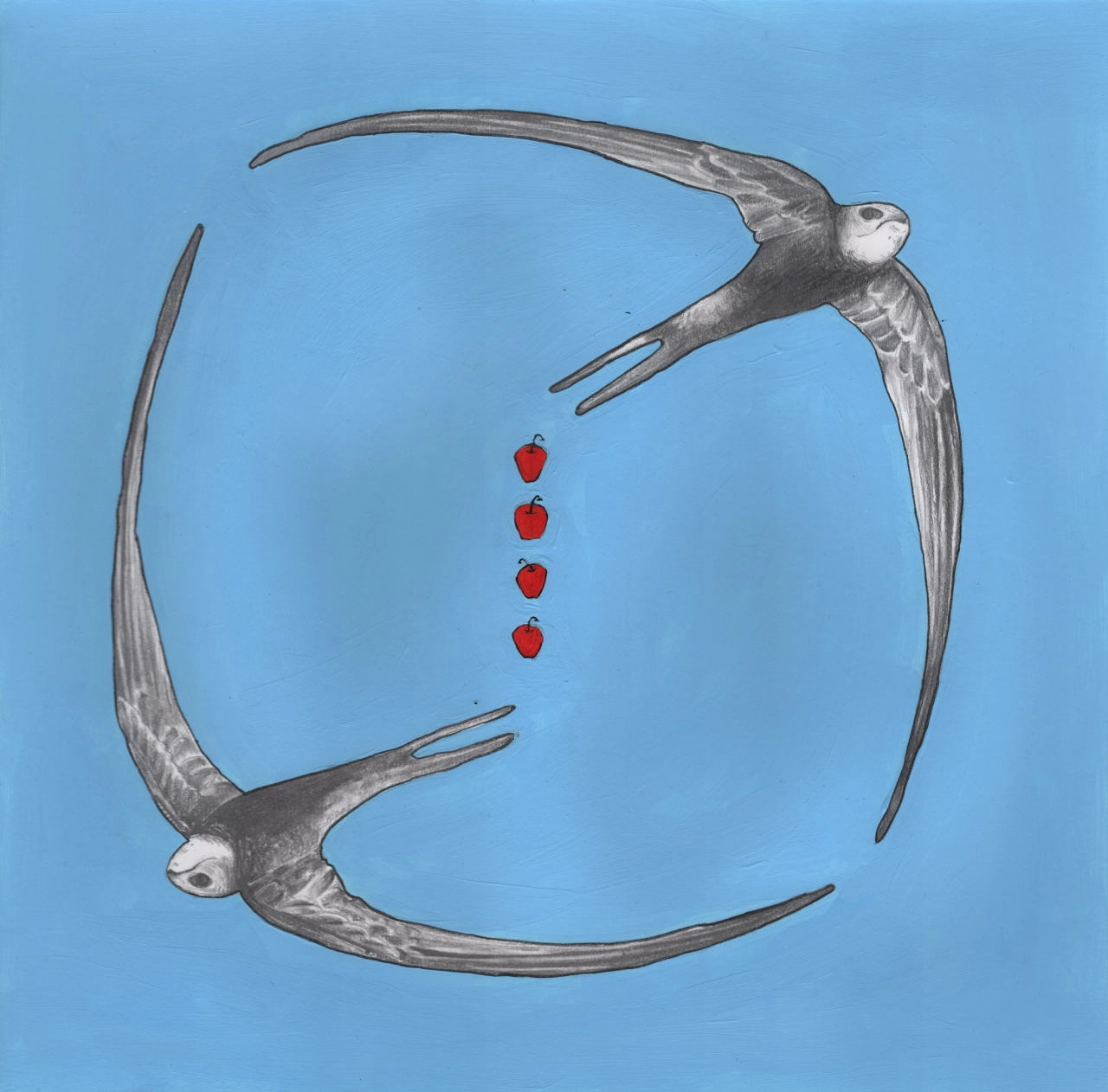
Cyclical, 2025
She spent a year at West Valley Community College, then moved to New York in 2023 at 19. She now studies for a BFA in Studio Art at the City College of New York, with a minor in Classics, and has won the Adelaide Jablonsky Award (2025) and the Connor Merritt Award (2026). She was also a finalist in the 2026 Astor Place student art competition, and alongside her degree, she works at the Morris Jumel Mansion on public programming, prop recreation and research.
Her subject matter took shape in 2025, when she was 20. Unknown numbers began texting her doctored and AI-generated images of herself, often depicting her as a minor. “I quickly discovered an active Discord group of over 100 men who had been doing this to me for, at the time, five years,” she says. It sent her back to her years as an influencer and to larger questions around human connection online. “I would not wish that on anyone; however, I credit this event for forcing me to figure out what I wanted to say with my art.”
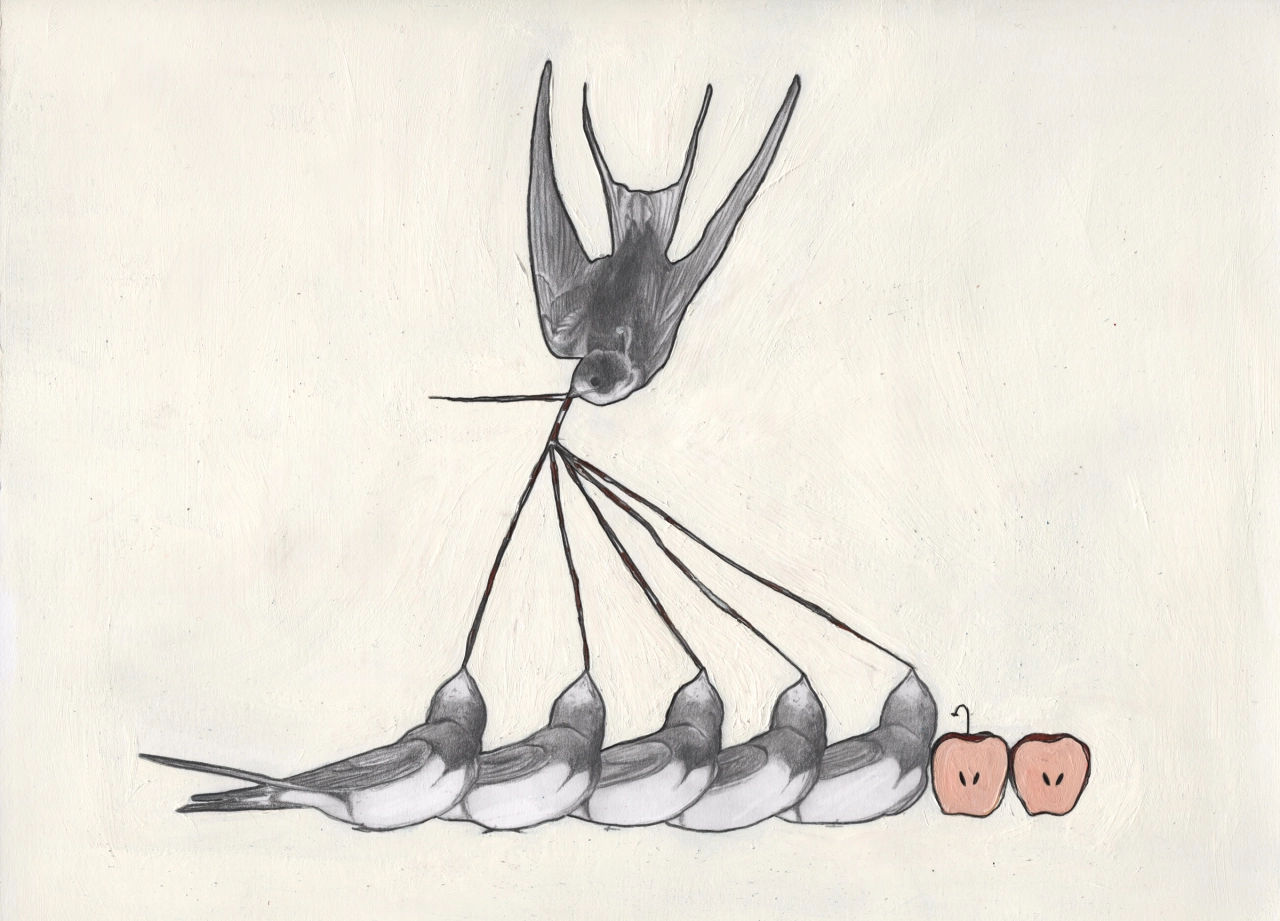
I’ll Never Get to Heaven, 2026
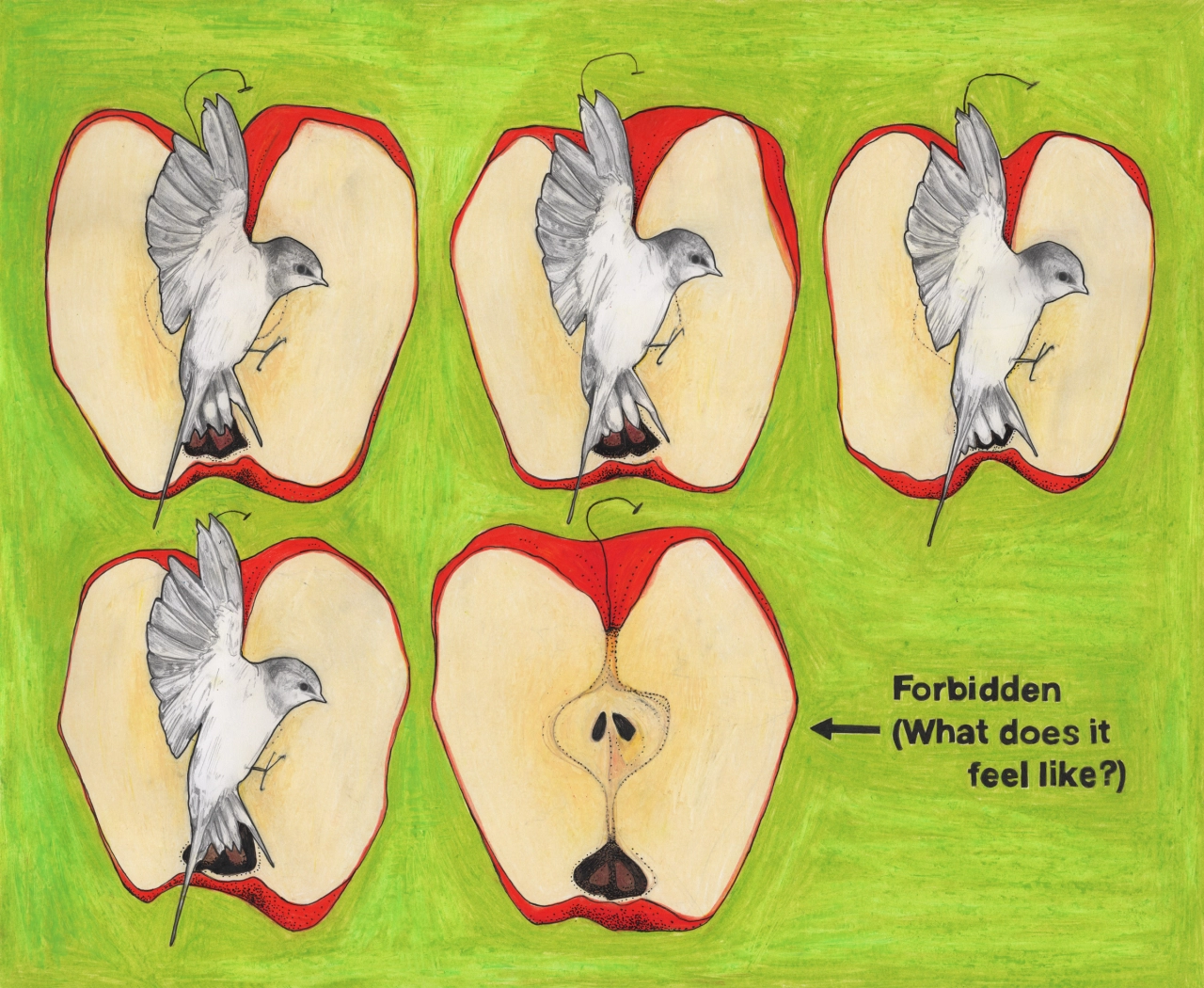
Forbidden (What Does it Feel Like?), 2026
What she wanted to say arrives through birds, apples and flowers, forms she associates with fragility and femininity, which she then “bastardises” with the visual language of the internet. At 18, she saw Sonya Rapoport’s exhibition Force fields at the Minnesota Street Project in San Francisco, and the artist’s continuous-feed computer paper and early ASCII art “resonated with a part of me that had not yet processed the impact that the internet had on me.”
She’s also drawn to Plato’s ideas about reality and representation. “If the physical world is a flawed copy of our internal world, then the internet is a further copied and flawed version of the physical world.” That chain of copies becomes literal in her work, where you see a swallow multiplying into fading outlines, as if copied and pasted; and a pixelated bird hovering over two ordinary swallows on a yellow grid; and a row of halved green apples placed with the caption “Forbidden (What does it feel like?)”.
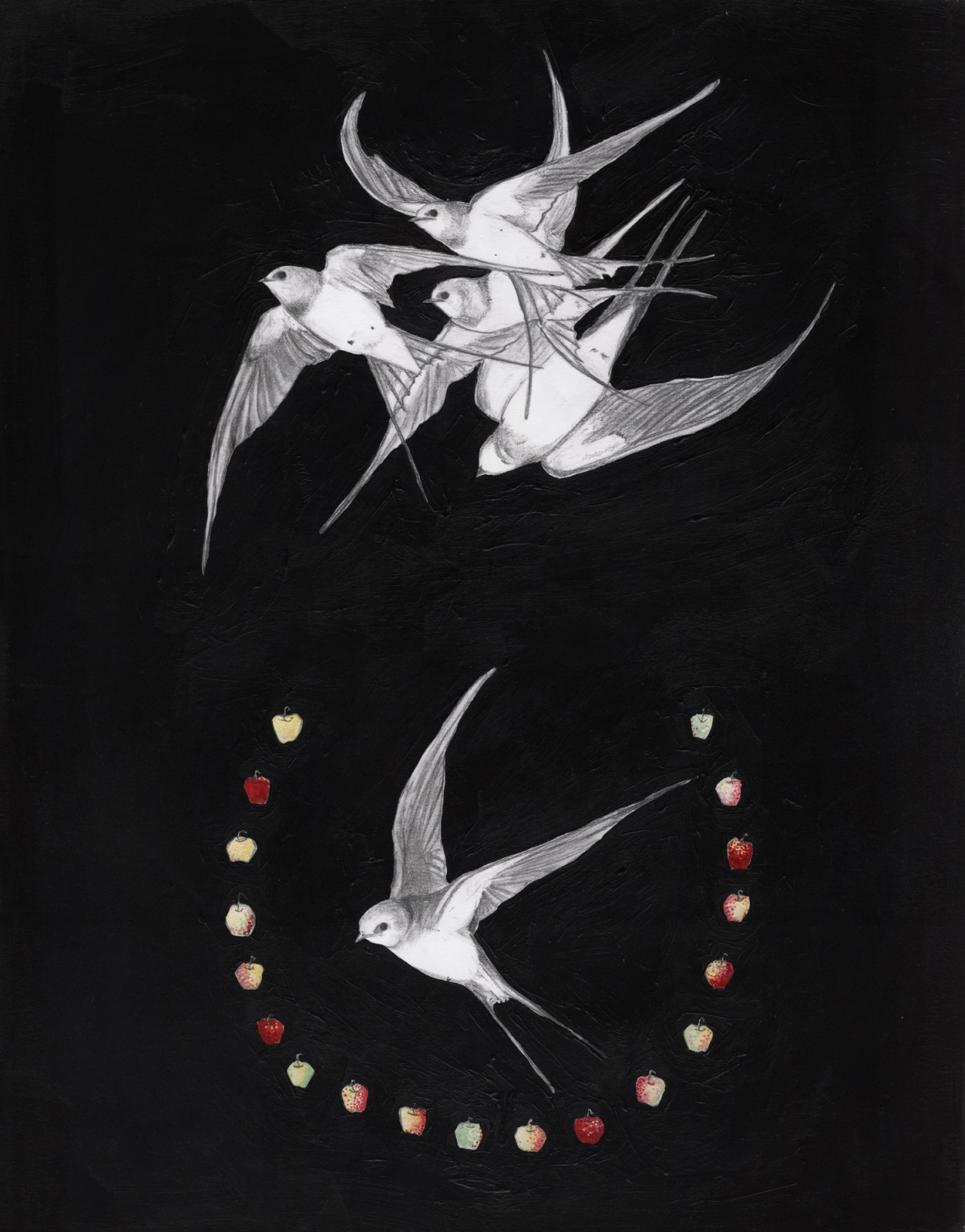
Murmuration, 2026
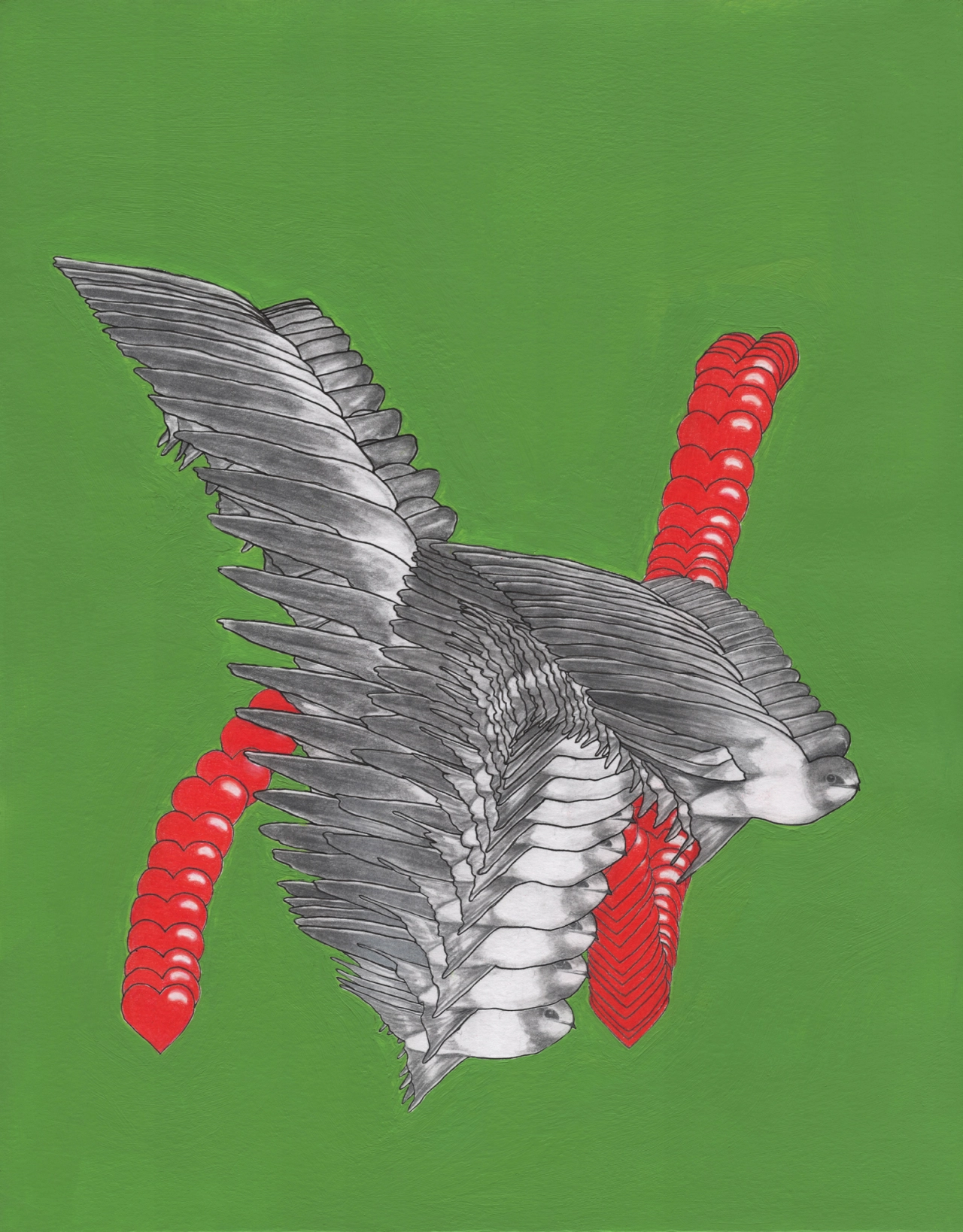
Winner!, 2026
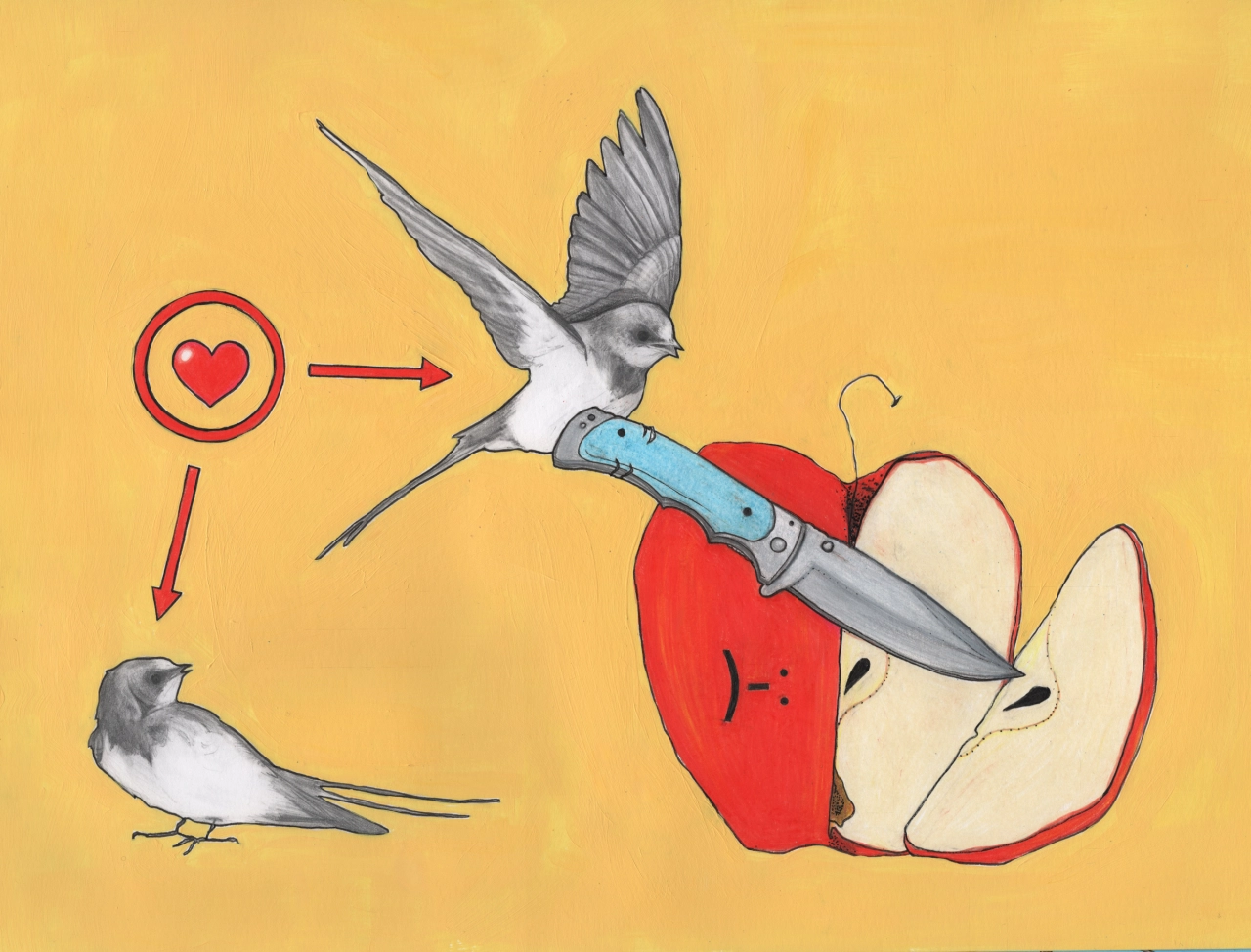
Cutting an Apple For my love, 2026
To build these scenes, she browses dead websites and old web interfaces, then looks at 19th-century scientific illustrations of flowers and birds. “I find similarity in this artificial attempt to capture the essence of something true,” she says. She works like one of those illustrators, “crudely recreating something with influences from digital spaces”, a method that deliberately mirrors the way the men copied her.
Beautiful Bastard (2026), the piece she says she’s proudest of, started when she felt stuck in her older work. Using coloured pencil, graphite, and Micron pen on pastel paper, she draws a poppy “plainly” on the left, and beside it looms a “monstrous, saturated, pixelated imitation of its form”, slightly larger and distorted, yet trapped inside a strict grid. “As the replications continue, the form loses its distinction and our experience with the object changes, becoming less sincere,” she explains.
A Kiss for the Love of my Life (2026) is a simpler piece made of coloured pencil, graphite and Micron pen on Strathmore drawing pad paper – it’s also a little quieter and more disturbing, featuring a swallow kissing a blank, expressionless figure who remains perfectly still. The drawing asks what devotion looks like when one side is a digital copy, and she links it directly to her harassers. “I wondered if this was how those men felt,” she says, “if there was any sort of connection between that version of me and those men with this crude devotion. It was purely artificial.” She gives the bird a short verdict. “The swallow in this painting does not care.”
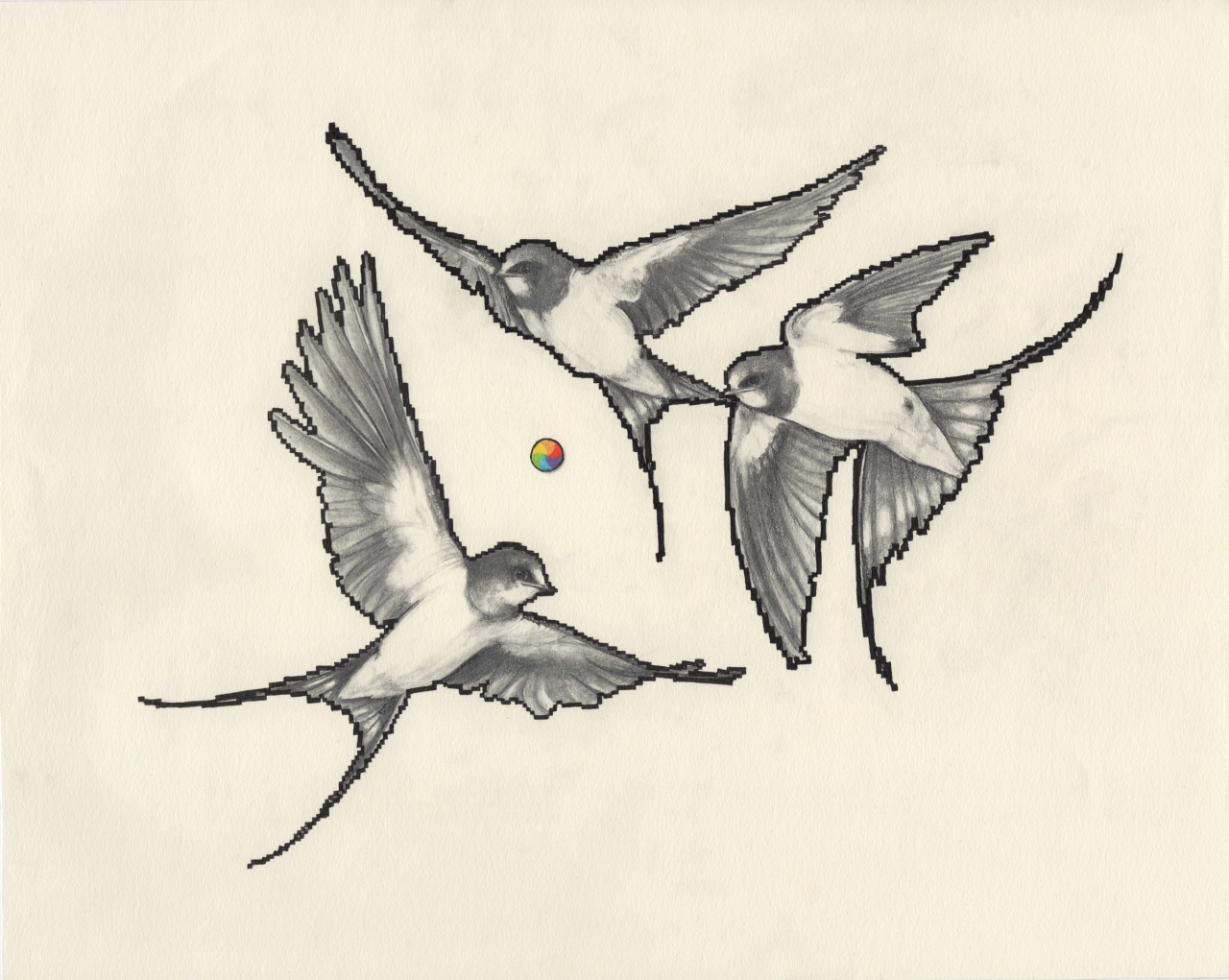
Clusterfuck, 2026
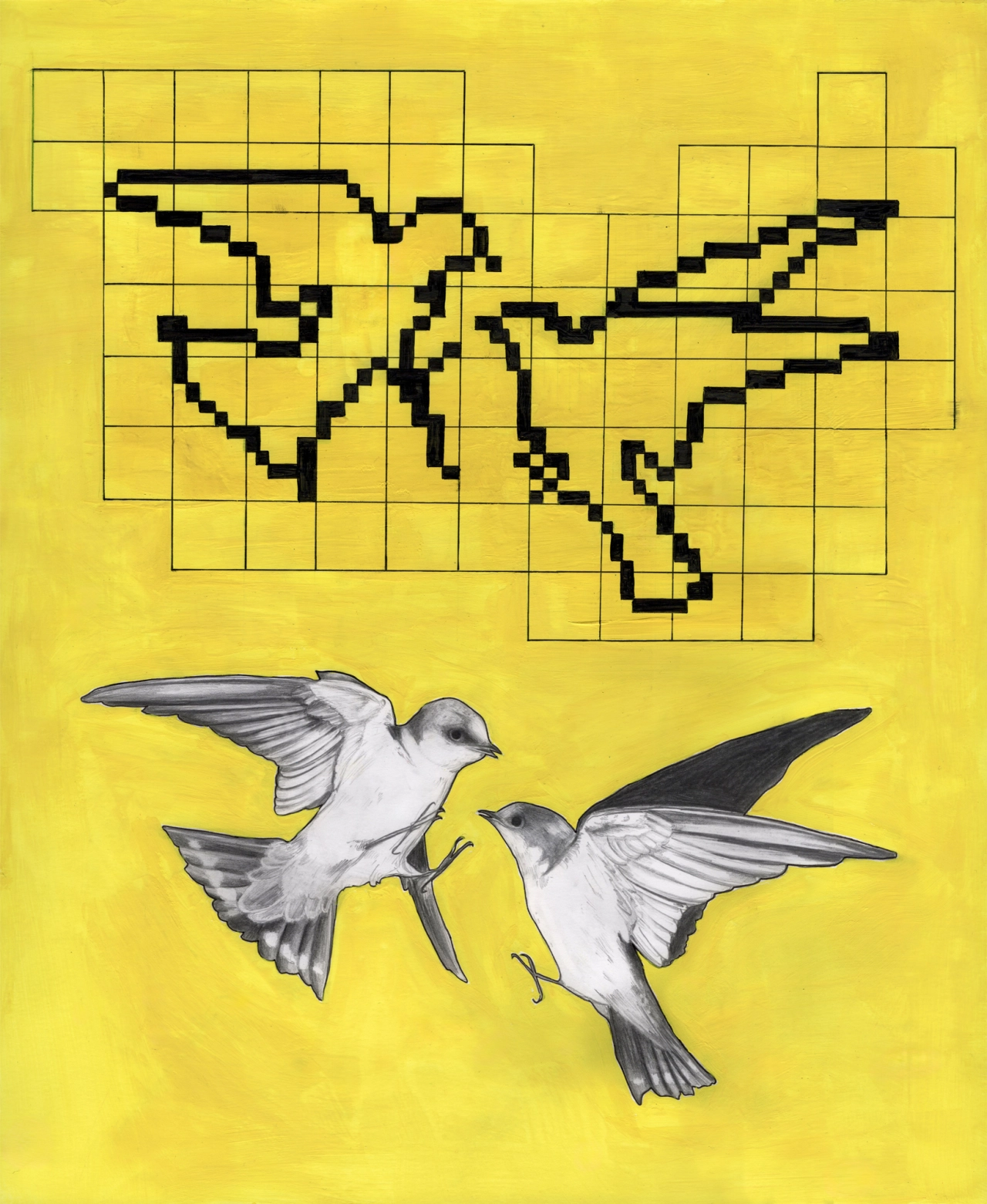
Grid Babies, 2026
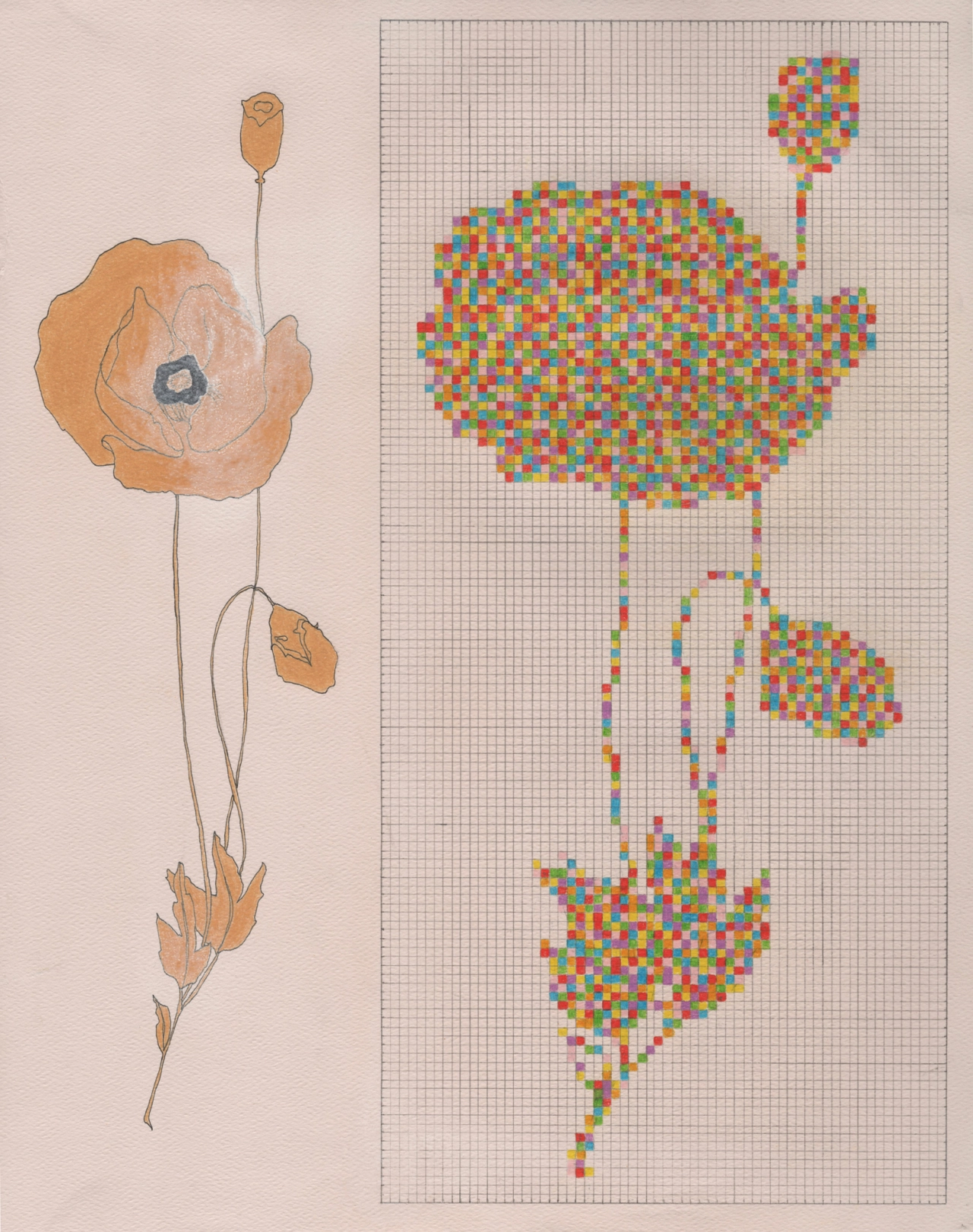
Beautiful Bastard, 2026
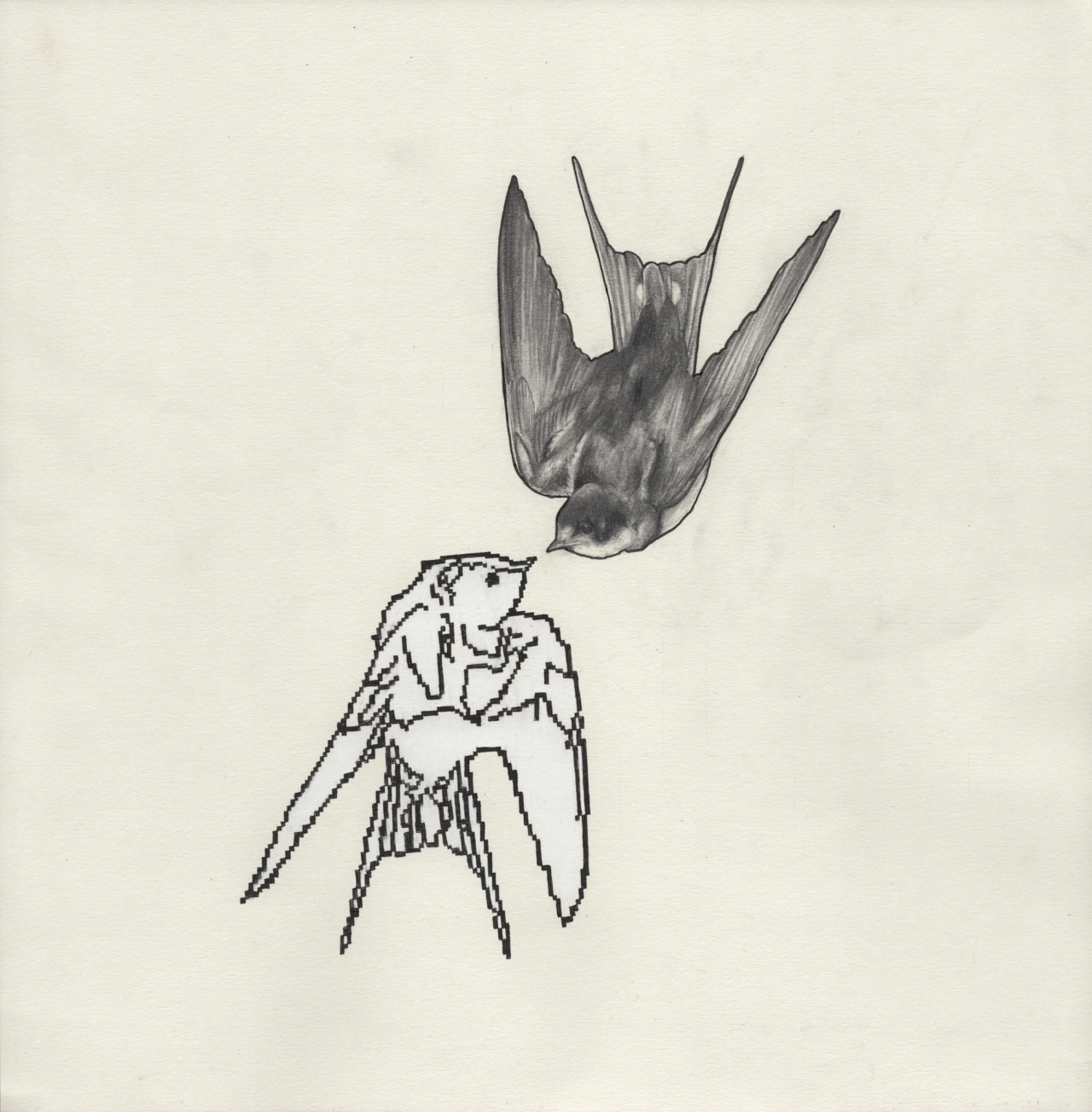
A Kiss For the Love of my Life, 2026
When asked about her goals and ambitions with her practice, Gigi is clear about what she wants. “The main message I am trying to convey is that the internet bastardises true connection and intimacy,” she says.
“It is a crude imitation of our already flawed physical world, and technological advancements in AI image generation are poison to the human experience. I want people to walk away with at least a subconscious appreciation for the human touch and a distaste for AI.”


